Built to Last, Built to Grow
July 27, 2026
Turnkey O-Ring Installation Cell Is Taking Shape
August 31, 2026What One Part Change Can Mean
You Might Need a Second Machine, Not a New One
A customer came to us with a problem
That sounds simple until you actually look at it:
they'd redesigned a part, and now they couldn't seal it with the equipment they already had.
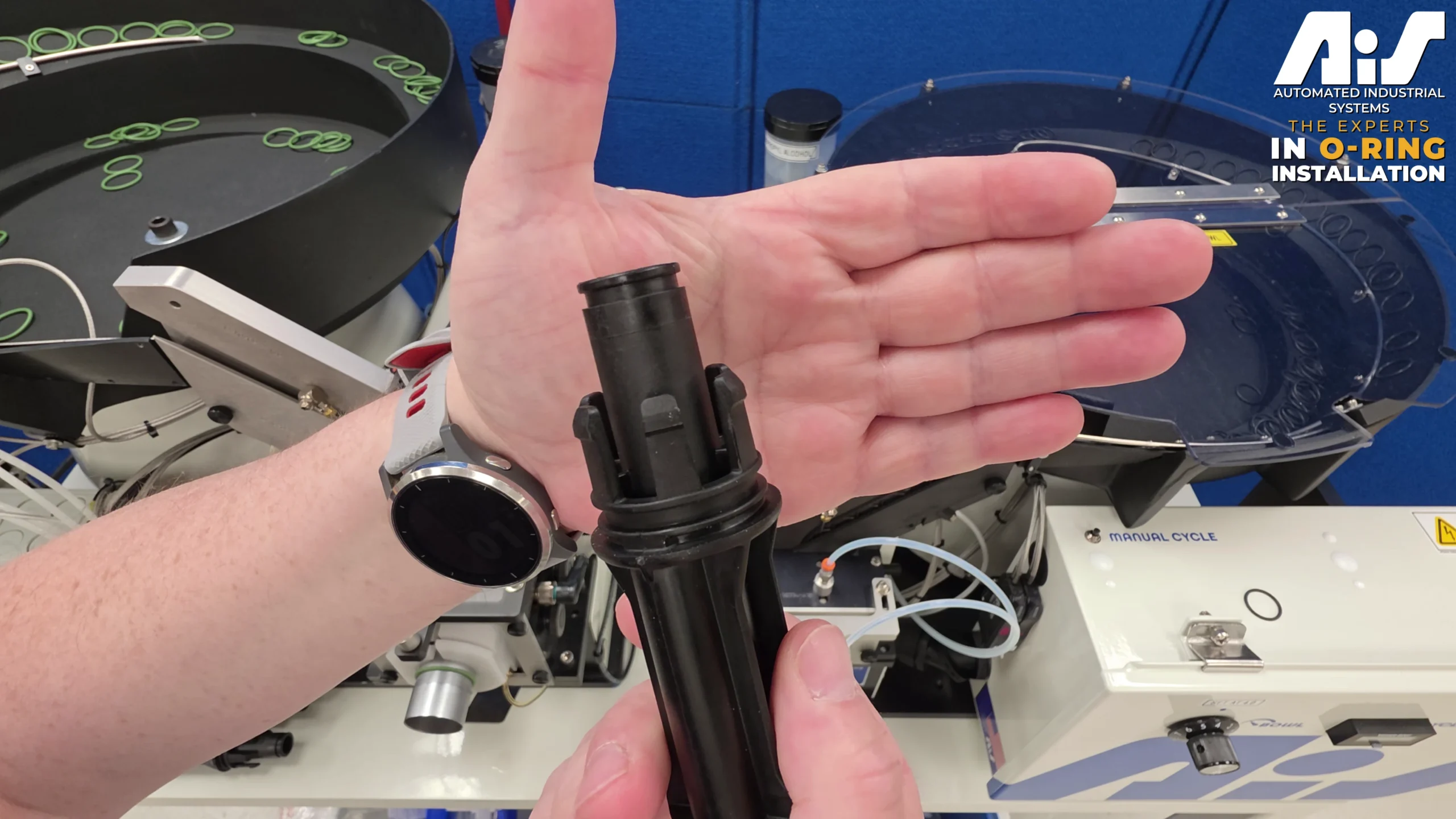
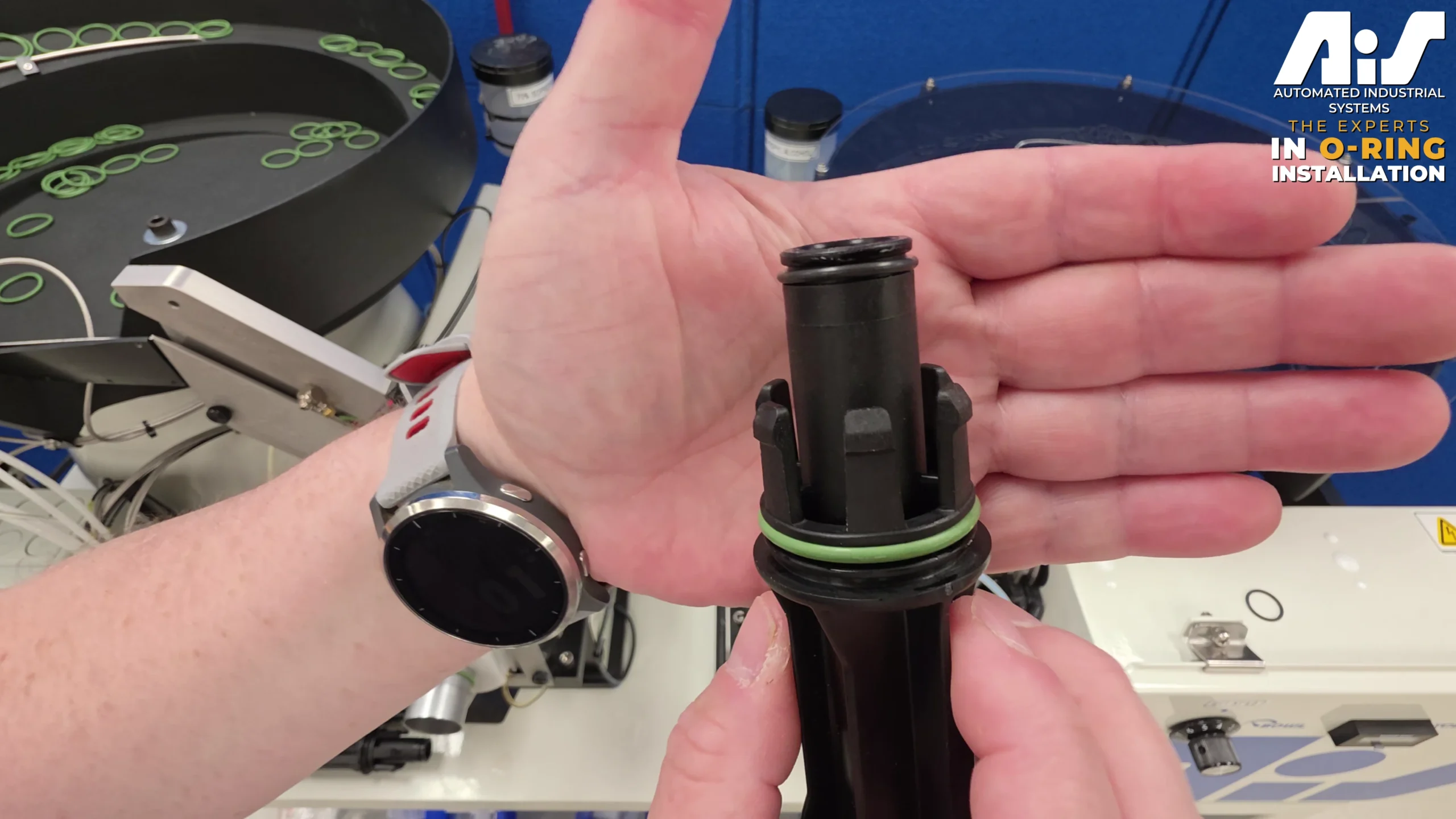
Here's what happened. This customer is a contract molder and assembler, the kind of shop that makes parts for other companies and often handles secondary operations like o-ring installation as part of the job. One of their parts got redesigned to combine two separate components into one molded piece. Good move on paper. Fewer parts, less assembly, lower cost. But the new single-piece part needed something the old two-piece version didn't: two different o-rings, installed in two different locations, at two very different sizes. One ring has an ID over an inch. The other is under half an inch. Different grooves, different depths, different specs entirely.
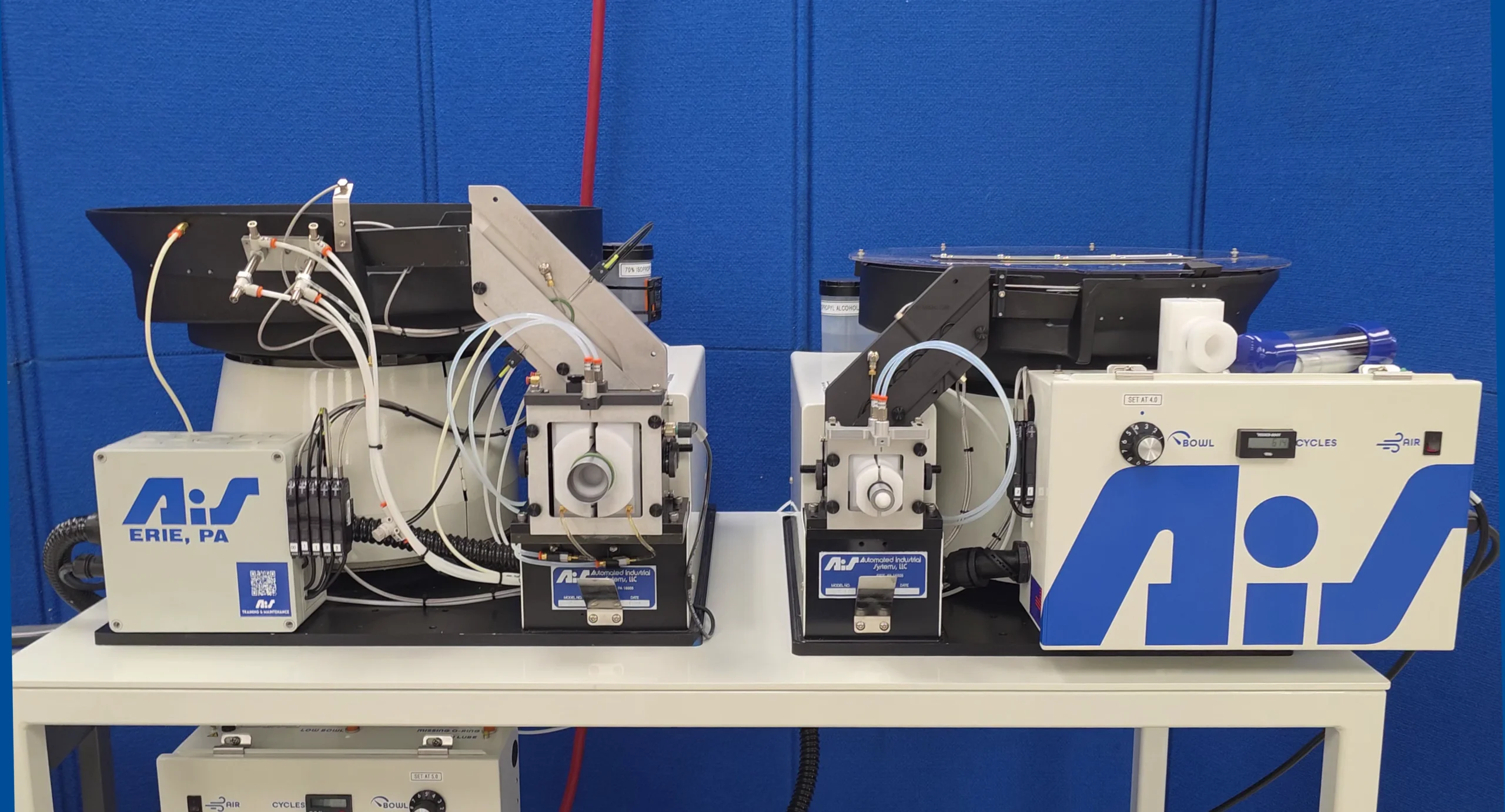
Their existing machine, an ASP-2, had been running the old part and o-ring combination for years. That combination didn't exist anymore. So the ASP-2 got refurbished and fitted with a new head assembly, built to run the new part and handle the larger of the two rings.
That solved half the problem.
The second, smaller ring needed its own install position, further up the part, and the geometry meant a second machine was the more practical answer rather than trying to force one head assembly to do both jobs. So a new ASP-1 got added specifically for that second ring. Both machines mounted on a shared work stand, positioned so one operator can run the part through both installations without walking it across the shop floor.
Two machines. One part. One cell.
Why two machines instead of one doing both jobs?
AIS works with customers to find the configuration that fits their process. In this case, that meant two units side by side rather than one machine trying to do both jobs. So the real question wasn't "one machine or two," it was how to set up two machines so a single operator could run the part through both without losing time or motion.
That's where the stand earns its keep. This cell runs by hand, an operator moving the part from one station to the next, not an automated line. The ASP-2 is set up right handed. The ASP-1 is set up left handed. Mounted next to each other on the shared stand, the part moves from one machine straight into the other with no repositioning, no walking it across the floor, and no awkward reach across the body to feed the second station. It sounds like a small thing until you're the one standing there running parts all shift. Handedness picked to match the layout, instead of fighting it, is the difference between a cell that flows and one that just happens to have two machines sitting near each other.
Does the installation order matter?
Not in this case. This customer's part could take either ring first without affecting fit or function, so the sequence was set up around operator convenience rather than a hard requirement. That's not always true. Depending on part geometry, groove depth, and what's accessible once the first ring is seated, order absolutely can matter on other jobs. Figuring out whether it does is part of what gets sorted out before a machine gets specced, not something you find out after.
The takeaway.
This customer didn't come to us asking for a work cell. They came with a part that changed and a sealing problem that followed. The two machine setup, right handed and left handed working side by side, was the solution that fit their specific situation. A different part, a different geometry, a different production volume, and the answer might look completely different.
That's really the point. Equipment that fits your process doesn't always mean one machine doing everything. Sometimes it's two machines, set up to complement each other, running as one station.
Want Consistent, Reliable O-Ring Install Performance?
AIS designs radial stretch–based O-ring installation systems that eliminate installation damage risk and deliver repeatable, high-yield performance. Whether you need standalone benchtop automation or full robotic integration, we engineer the process to help your seals actually seal.
Talk to AIS about a process-centric installation solution, not a guess.