How AIS Validates Seal Installation Machines Before Shipment
January 7, 2026
When O-Rings Don’t Want to Behave
January 28, 2026Why AIS Builds In-House Instead of Buying Components
Tolerance stack-ups, lead time, and accountability (aka: why we don’t outsource the hard parts)
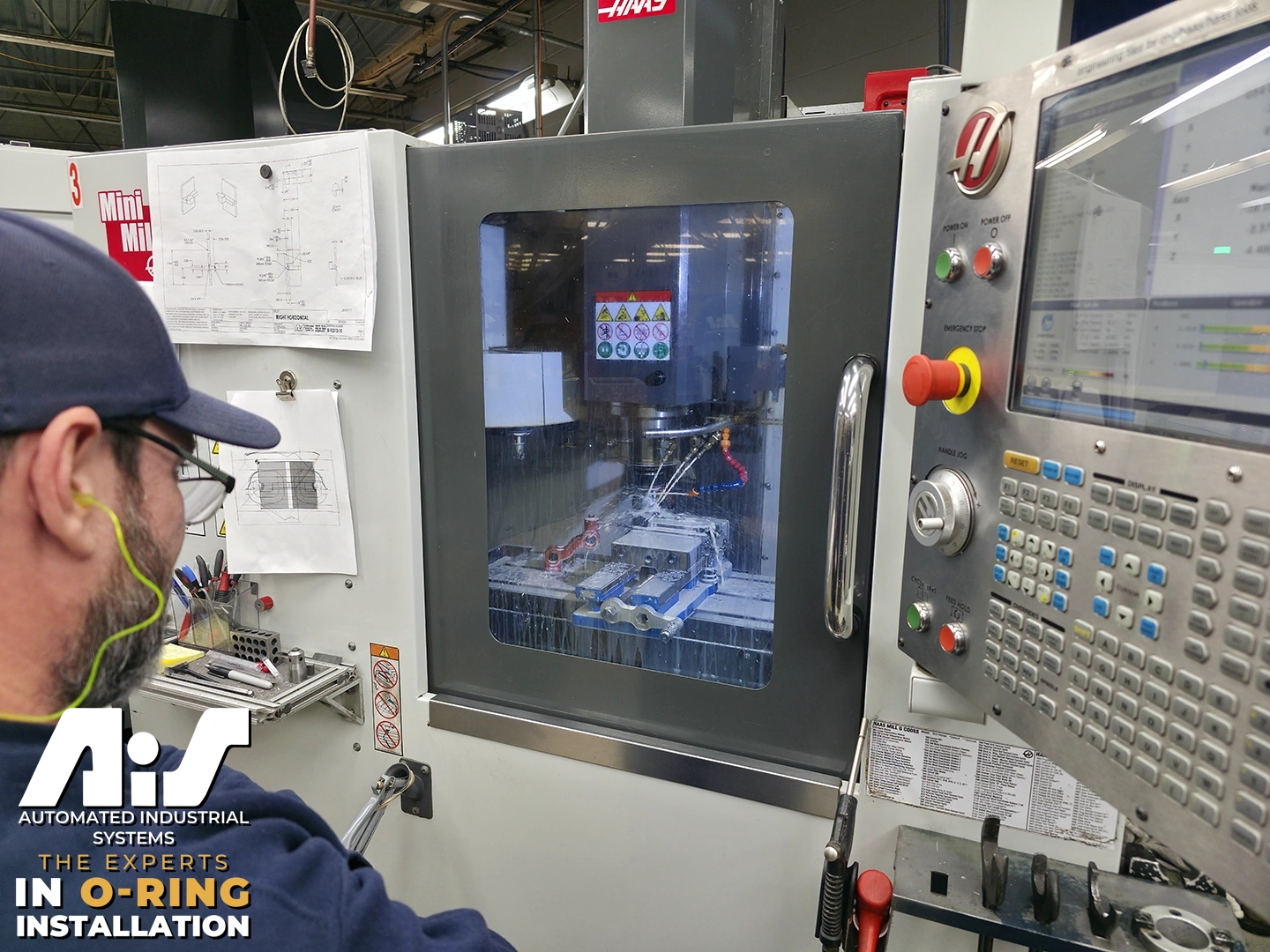
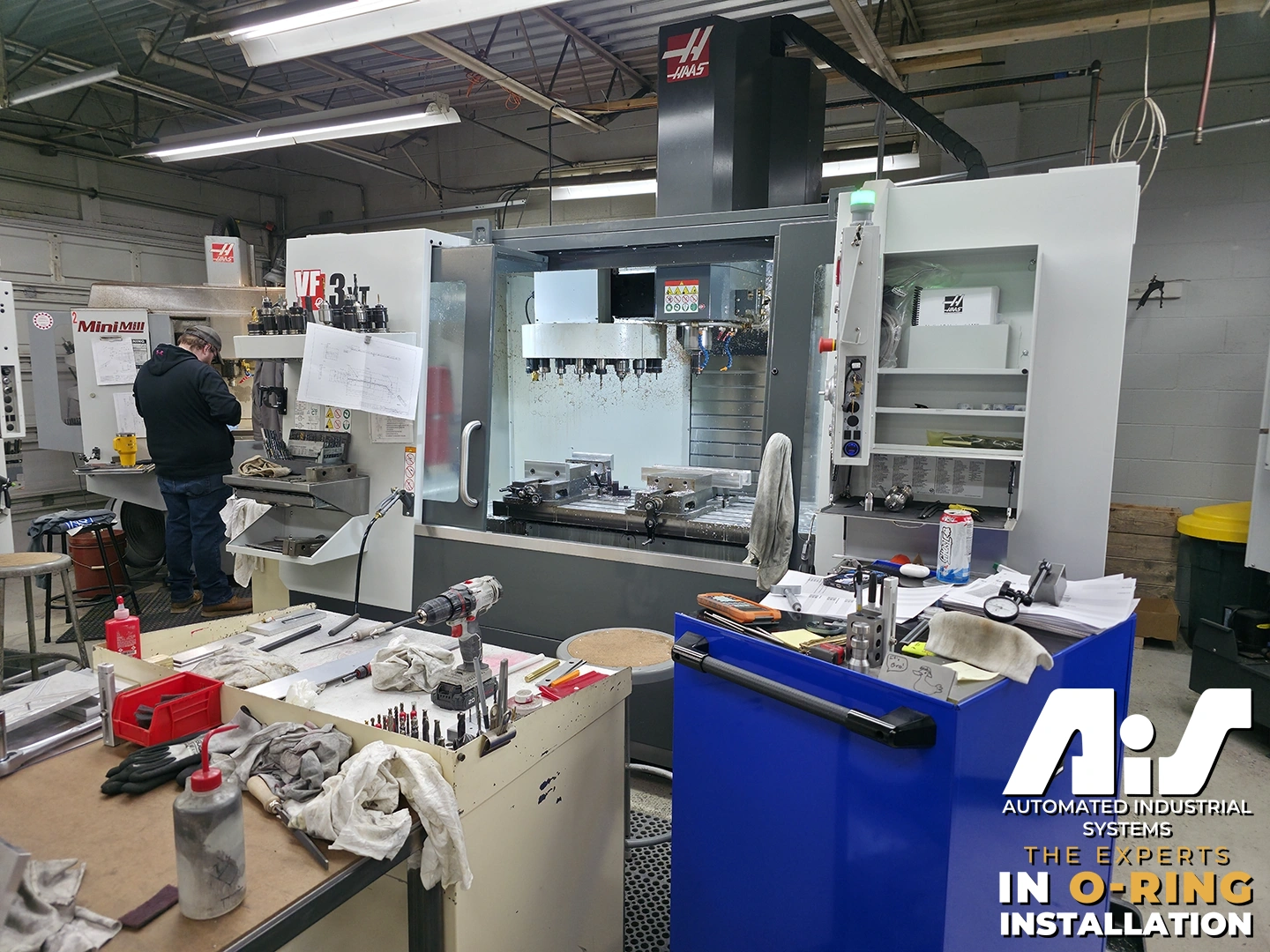
Why AIS Builds In-House
Let’s be honest: it would be so much easier to buy more components off-the-shelf, bolt them together, and call it a day.
A lot of machine builders do exactly that.
AIS does not.
We’ve been building O-ring and seal installation machines since 1978, and we’ve manufactured over 1,200 custom systems over that time. That kind of track record doesn’t come from playing parts roulette with third-party assemblies.
So why do we build so much in-house instead of buying?
Because when you’re dealing with real manufacturing environments, precision matters, lead times matter, and accountability REALLY matters.
Let’s break it down.
1) Tolerance Stack-Ups: Where Precision Goes to Die
If you’ve ever heard the phrase “within tolerance” and felt a small surge of dread, you’re our kind of people.
Here’s the problem:
Even if every component you buy is “in spec,” you still get cumulative error when you assemble them. That’s tolerance stack-up. Tiny variations in multiple parts combine into one big headache at the end of the assembly chain.
And in O-ring installation, the consequences aren’t theoretical.
A few thousandths in the wrong direction can cause:
-
inconsistent ring placement
-
ring twisting or rolling
-
seal damage
-
feeding issues
-
premature wear on tooling
-
and the classic: “it ran fine during trial, then it didn’t”
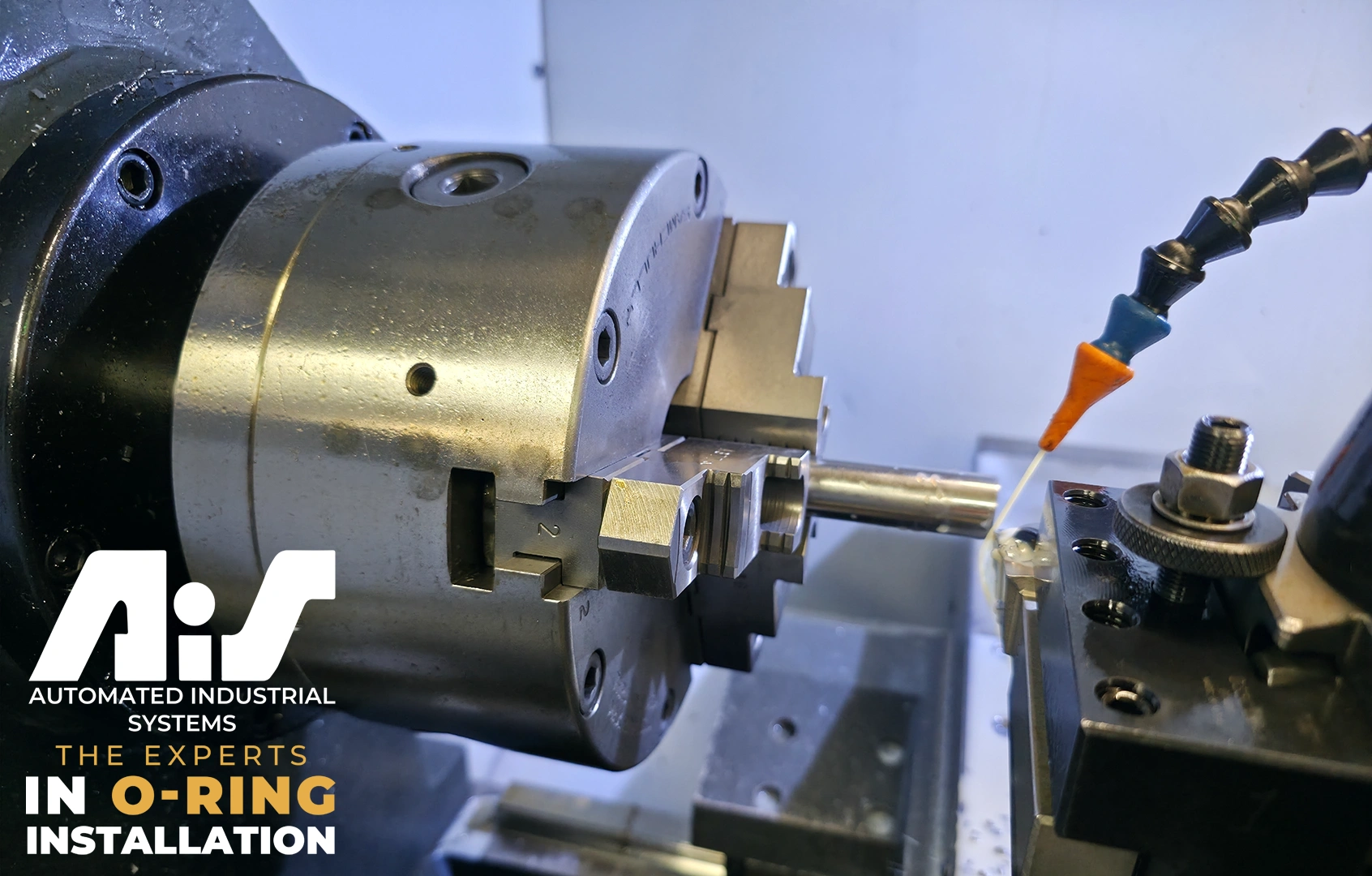
That’s why AIS machines aren’t built like a shopping cart full of “close enough.” The core mechanisms and tooling are designed and built to work together, not merely coexist.
If a component touches the ring…
If it affects placement…
If it influences repeatability…
…it needs to behave predictably. Every cycle.
2) Lead Time: Buying Parts Doesn’t Always Make Things Faster
Outsourcing is supposed to reduce lead time.
In practice, it often does the opposite.
Buying critical subassemblies from third parties introduces:
-
supplier scheduling risk
-
long and shifting lead times
-
“we can ship it next month” optimism
-
multi-vendor coordination delays
-
and the dreaded “we’re waiting on one more part”
AIS takes a different approach: build the critical components ourselves so the schedule doesn’t depend on somebody else’s backlog.
This is one of the reasons AIS machines can be tailored so heavily, because customization isn’t an afterthought, it’s baked into how the machines are engineered and manufactured in the first place.
Yes, this makes quoting more...interesting. No, we don’t cry about it, much.
3) Accountability: There’s Nowhere to Hide
When a machine builder outsources major subsystems, here’s what happens when something goes sideways:
-
vendor blames vendor
-
vendor blames operator
-
vendor blames part variation
-
everyone blames the phase of the moon
Meanwhile you’re stuck with downtime, scrap, and an assembly line that isn’t producing.
AIS prefers a simpler system:
If we designed it, built it, and shipped it… we own it.
That’s why AIS maintains a fully staffed engineering department and builds systems designed around the customer’s actual parts and requirements. (assemblysolutionsinc.com)
When a customer calls with a problem, we don’t start with “well, that component isn’t ours.”
We start with: what happened, and how do we fix it?
That’s accountability. The kind manufacturers actually need.
4) But Wait: Don’t You Use Feeder Bowls?
Yes. We do.
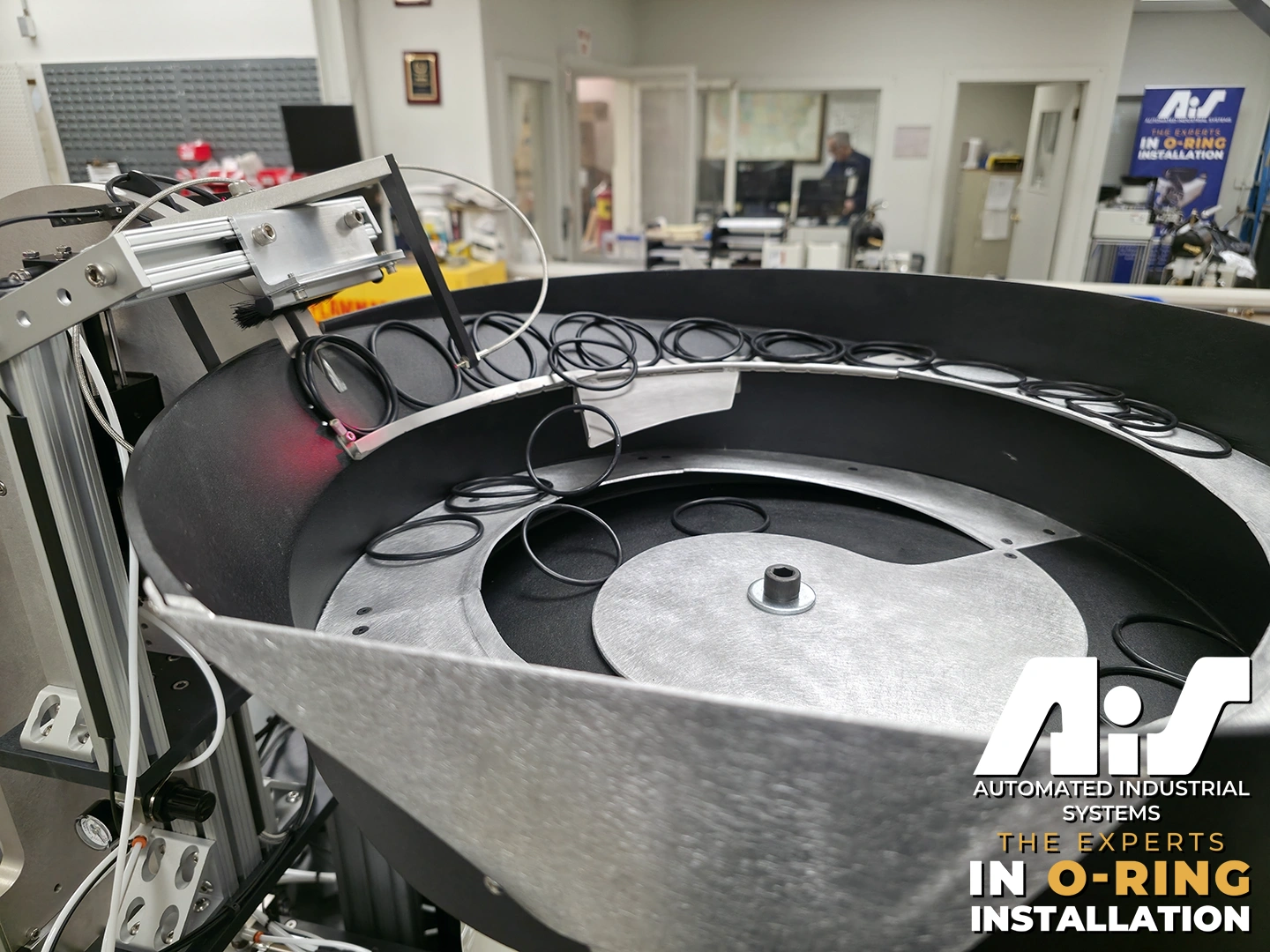
AIS does not manufacture feeder bowls.
Because we’re machine builders, not vibratory-bowl philosophers.
But, and this is the important part, we don’t just bolt a bowl onto the side and hope it behaves.
AIS routinely performs custom tooling and modifications on feeder bowls to improve reliability and consistency, including adjustments specifically aimed at easy feeding of seals.
Because a feeder bowl that “technically feeds” is not the same as a feeder bowl that feeds:
-
smoothly
-
consistently
-
without jams
-
without flipping rings
-
without static clumping
-
without making operators want to quit
AIS offers options for static-related feeding issues too, like coatings and ionizing assists, because rings can be weird and materials can be worse.
What This Means for You
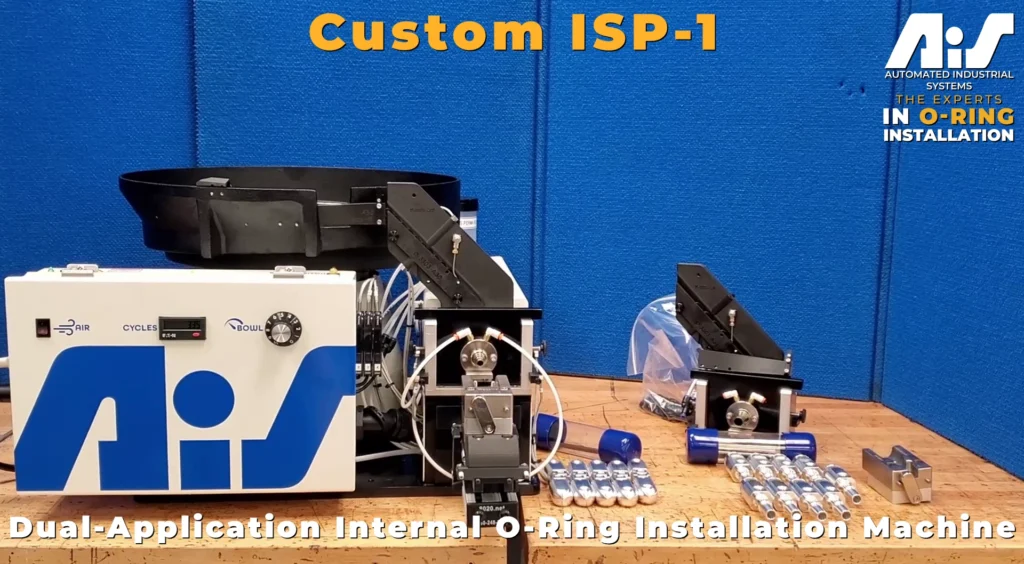
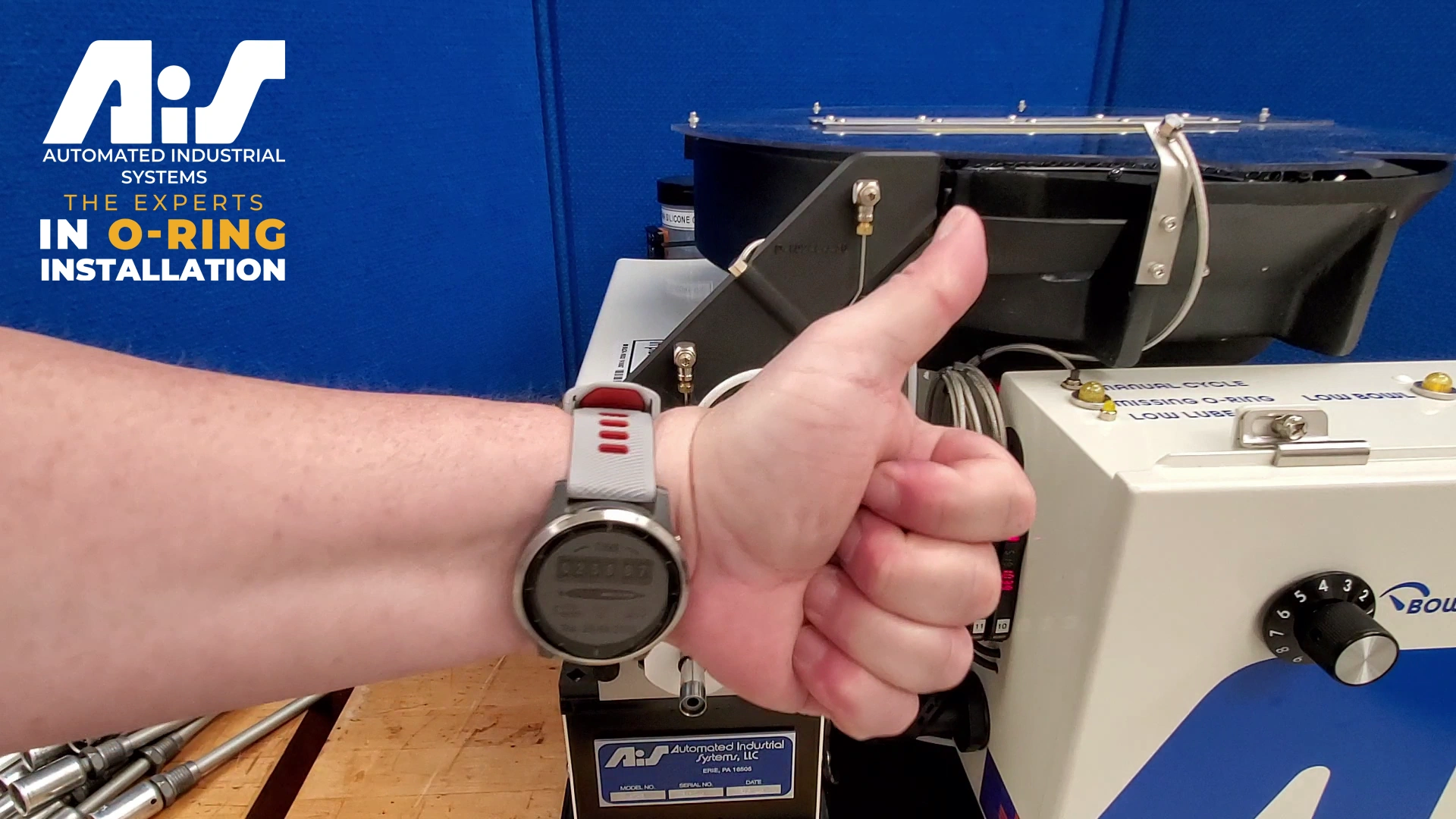
When you buy an AIS system, external (ASP series) or internal (ISP series), you’re buying equipment that’s engineered for repeatable, real-world production.
That reliability comes from controlling the build:
-
in-house machining of critical components
-
tooling built for the exact ring/part interaction
-
integration designed around the process
-
and the accountability to back it all up
Or put another way:
We build it in-house because your production line doesn’t care about excuses.
Want to Talk Through a Build?
If you’re dealing with quality issues, inconsistent installs, seal damage, or slow manual assembly, AIS can help evaluate the process and recommend the right machine configuration (and tooling approach) for your part.
Call 814-838-2270 or reach out through the site to get a quote.