
AIS at Automate 2026 (Chicago): Live O-Ring Installation Demos + Verification Sensing | Booth 4349
March 16, 2026The AIS VPM Doesn't Care Which Way Is Up
Or Down, Or Sideways
The AIS VPM Works How YOU Need It To
Most o-ring installation machines are opinionated about geometry. They want the part presented a certain way, at a certain angle, at a certain height. The part works around the machine.
The AIS Variable Placement Module, the VPM, is built on the opposite philosophy. The machine works around the part.
That's not marketing copy. That's a pneumatically controlled rotary actuator doing it for real.
What the VPM Actually Does
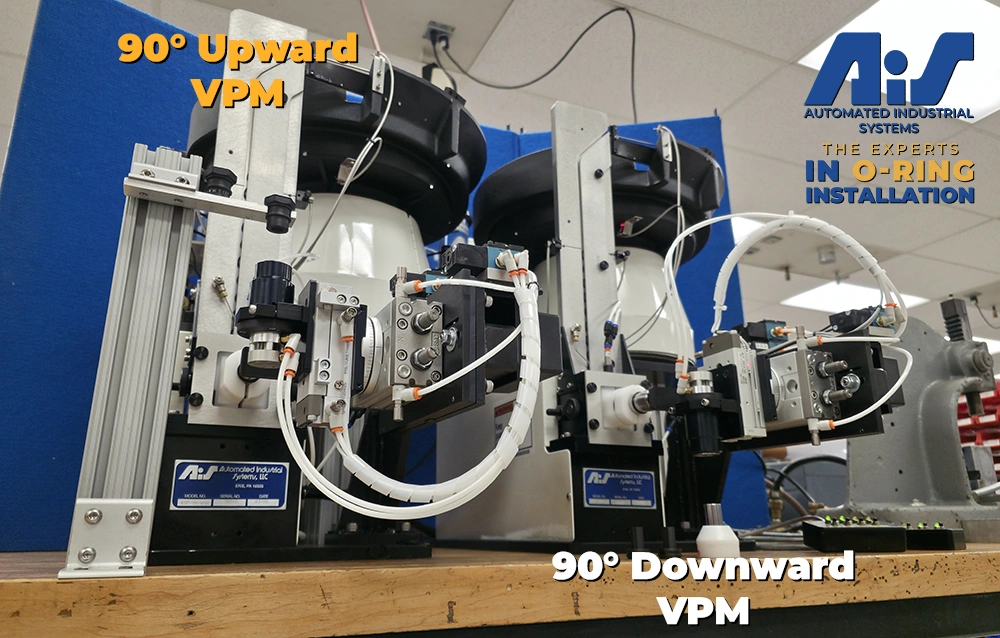
The VPM is an add-on module that pairs with AIS's ASP-1, ASP-1M, or ASP-2 o-ring installation machines. Its job is to take the seal onto the transfer mandrel, the piece that actually delivers the o-ring onto the part, and rotate it to wherever the installation point actually lives. Up 90 degrees. Down 90 degrees. Straight out at 180. Any angle in between. Each VPM is configured and programmed for one specific angle at build time, matched to the geometry of your application. That's the angle it runs at, repeatably, for every cycle. The ring gets installed with the same precision you'd get in a straight vertical drop, just... somewhere the geometry of a standard machine couldn't reach.
Cycle rates hit up to 45 installations per minute, 2,700 per hour, regardless of the angle you're working at. The rotation doesn't cost you throughput.
Three Machines. Three Demonstrations. One Point.
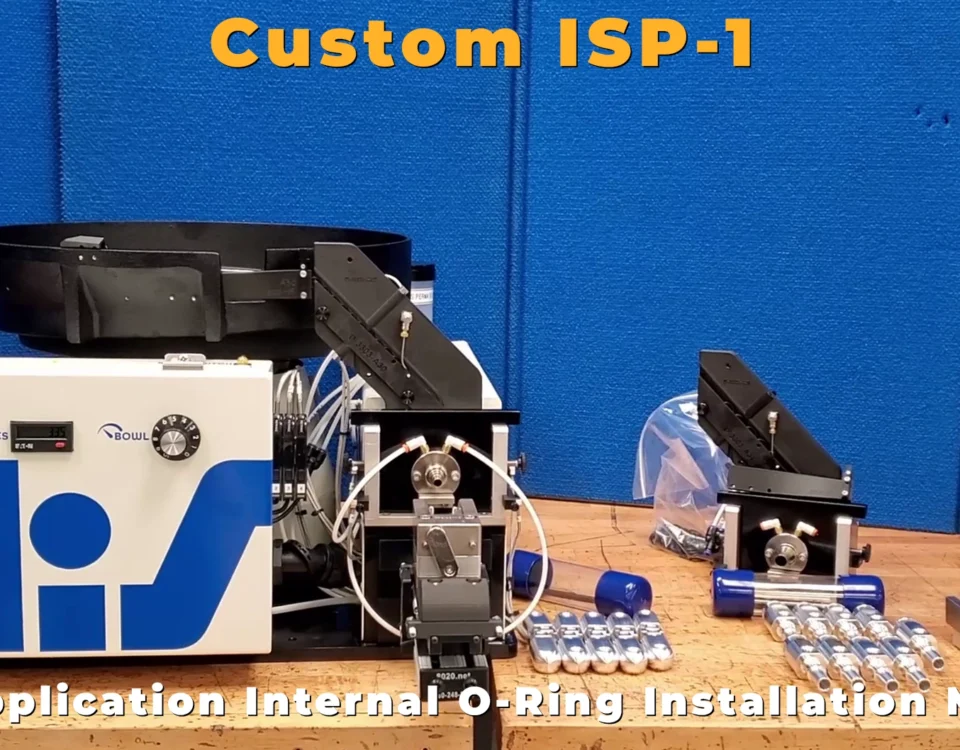
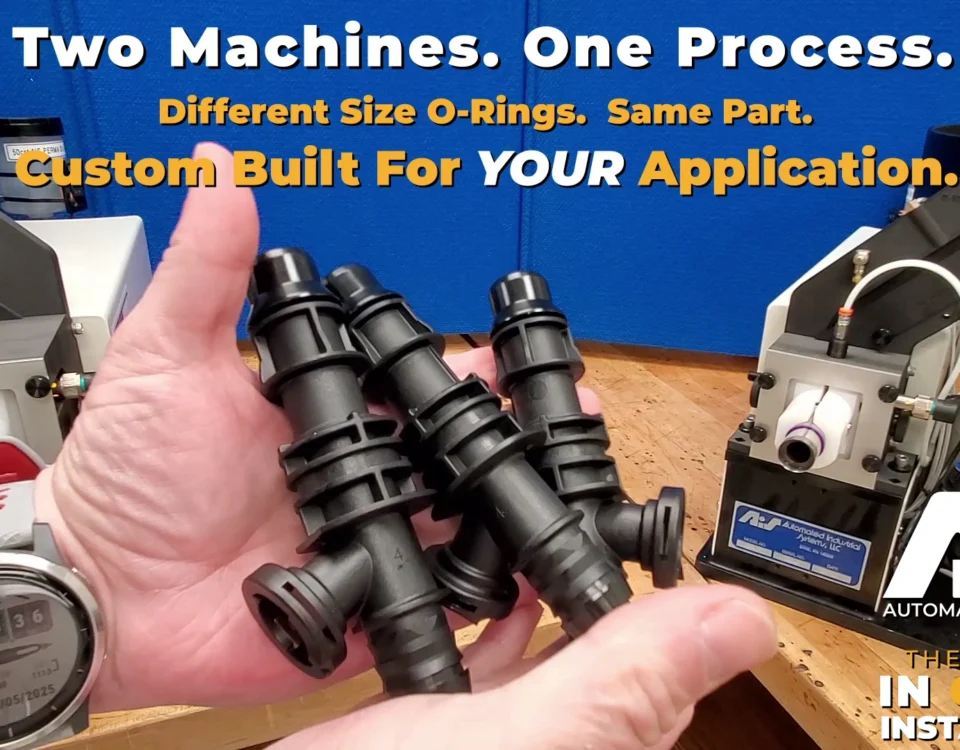
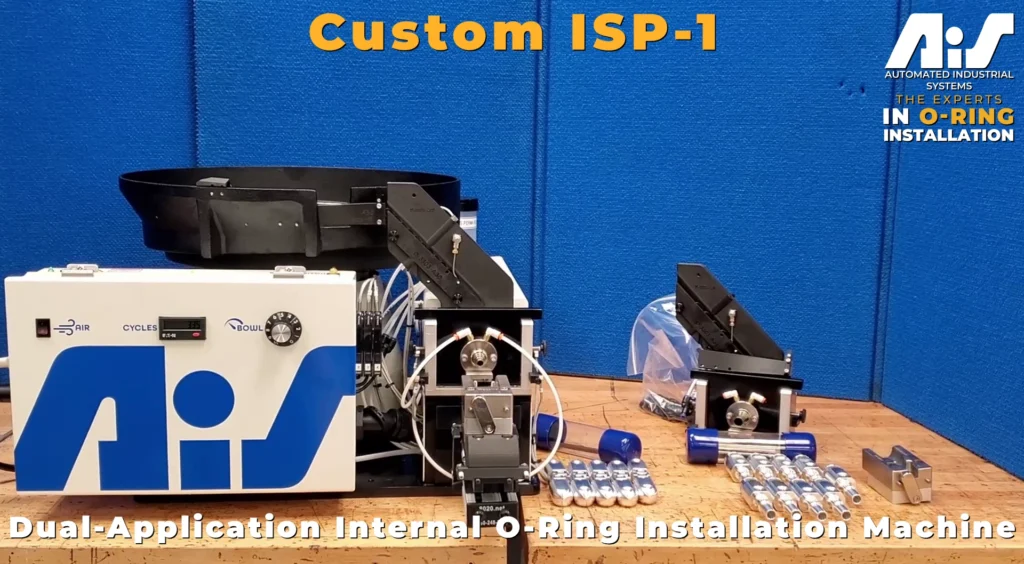
We recently documented three VPM-equipped machines and captured them on video using 3D-printed demo parts, parts that replicate only the o-ring installation geometry of the actual production components, which are under NDA.
Machine one: VPM configured to rotate 90 degrees upward, installing a single o-ring after the upswing.
Machine two: VPM rotating 90 degrees downward, installing a single o-ring on a different part geometry.
Machine three: Also rotating 90 degrees downward, but this one is installing three o-rings at three different depths on a single part, reaching below the machine's own baseplate to do it.
Same VPM platform. Three different configurations. Three different jobs.
That last one is worth pausing on. Three rings. Three depths. One part. One machine. The VPM sequences through each installation point without repositioning the part between cycles. For any production line where a component needs multiple seals before it moves to the next station, that kind of cycle efficiency adds up fast.
Built for the Line, Not the Other Way Around
Automated production lines are precise things. Every station has a purpose, every component arrives at a specific orientation, and the geometry of how parts move through the line isn't accidental, it's engineered. Sometimes that engineering puts an o-ring installation point at an angle, a depth, or a position that a standard machine simply wasn't designed to reach.
That's not a design failure. That's reality. Complex products with multiple sealed components don't always have the courtesy to arrange their o-ring grooves in a way that's convenient for conventional equipment.
The VPM is the answer to that reality. Each unit is configured and programmed for the specific angle your line requires, 90 degrees upward, 90 degrees downward, 45 degrees out, wherever the installation point actually lives. That's not a limitation; that's how you get repeatable, production-grade precision at up to 2,700 cycles per hour. And as the nine-machine order demonstrates, when a line has multiple geometry problems, you deploy multiple VPMs, each one purpose-configured for its station.
The machine meets the line. That's the design philosophy, and it's why the VPM is the kind of module that shows up in serious automation projects, not as a workaround, but as a planned component of a system that was engineered to do something specific at high volume.
Nine Machines. One Line.
Those three demo machines aren't the whole story. They're part of an order of nine AIS machines, all going to a single customer, all destined for a single automated production line building a single product.
That product, as it happens, requires a lot of o-rings. On a lot of different parts. Being assembled together. The line will be installing o-rings at multiple stations, on multiple component types, and then assembling those ringed components with other ringed components into a finished product.
Nine machines. One line. Purpose-built from the ground up with AIS equipment. That's a level of integration that doesn't happen by accident, it happens because the machines can be configured to meet the line, not the other way around.
If you're building something that looks anything like that, a product with multiple seal points, a line with multiple assembly stages, or a geometry problem your current equipment can't handle, AIS is the call.
Want Consistent, Reliable O-Ring Install Performance?
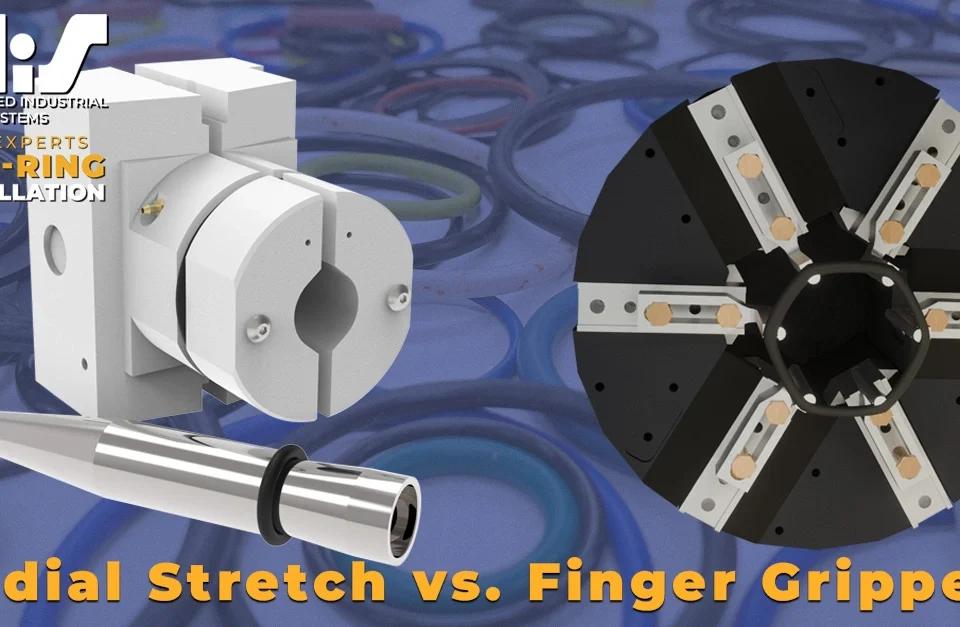
AIS designs radial stretch–based O-ring installation systems that eliminate installation damage risk and deliver repeatable, high-yield performance. Whether you need standalone benchtop automation or full robotic integration, we engineer the process to help your seals actually seal.
Talk to AIS about a process-centric installation solution, not a guess.