
Inspection Stations for O-Ring and Seal Installation Machines
Because “we think it’s installed” isn’t good enough
How to Verify Your Seal Installs
Installing an O-ring correctly is only half the job. Verifying that it’s actually there, seated properly, undamaged, and ready to move downstream is where a lot of real-world failures show up.
Automated Industrial Systems inspection stations are designed to confirm proper seal installation immediately after the install step. Before bad parts turn into scrap, rework, or warranty claims.
Whether your process is manual, semi-automatic, or fully automated, we build inspection solutions that match how you actually run parts, not how a brochure pretends you do.
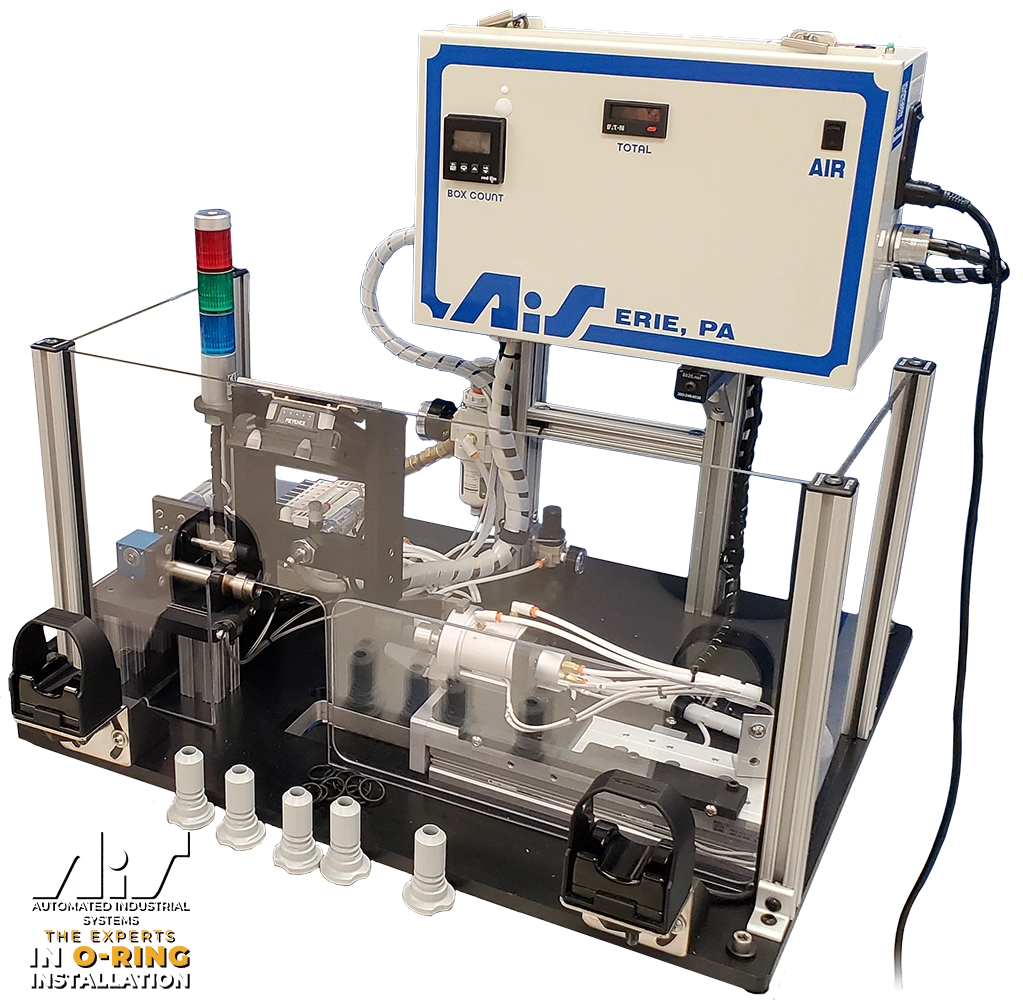
What Are Inspection Stations?
An inspection station is a defined check step that verifies a part immediately after O-ring or seal installation. Typical checks include:
-
Seal presence
-
Correct seating in the groove
-
Required orientation or depth
-
Conformance to your acceptance criteria
-
Detection of damaged, pinched, twisted, or partially cut seals
Inspection is not a guess. It’s a controlled quality gate.
How Inspection Is Done
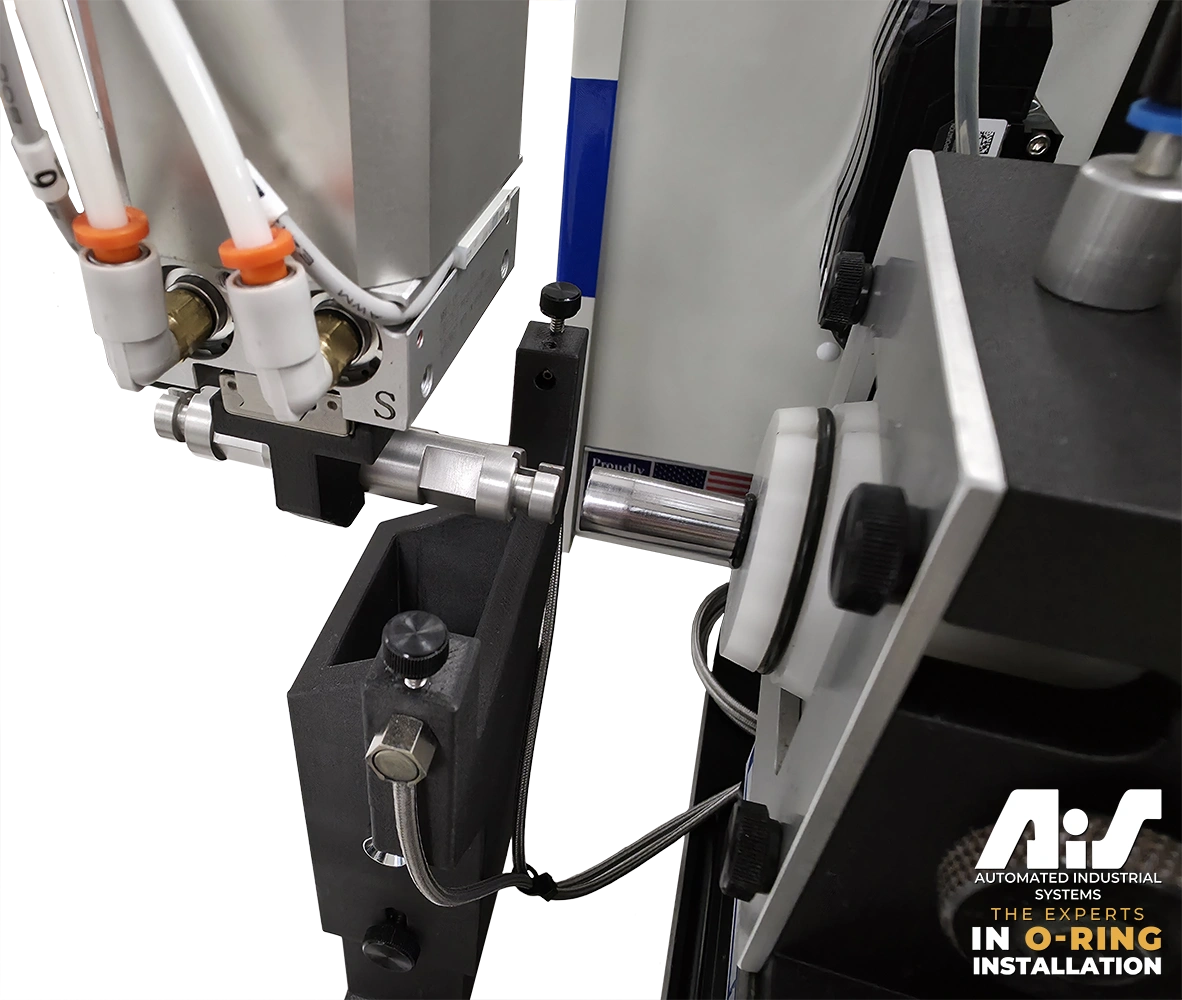
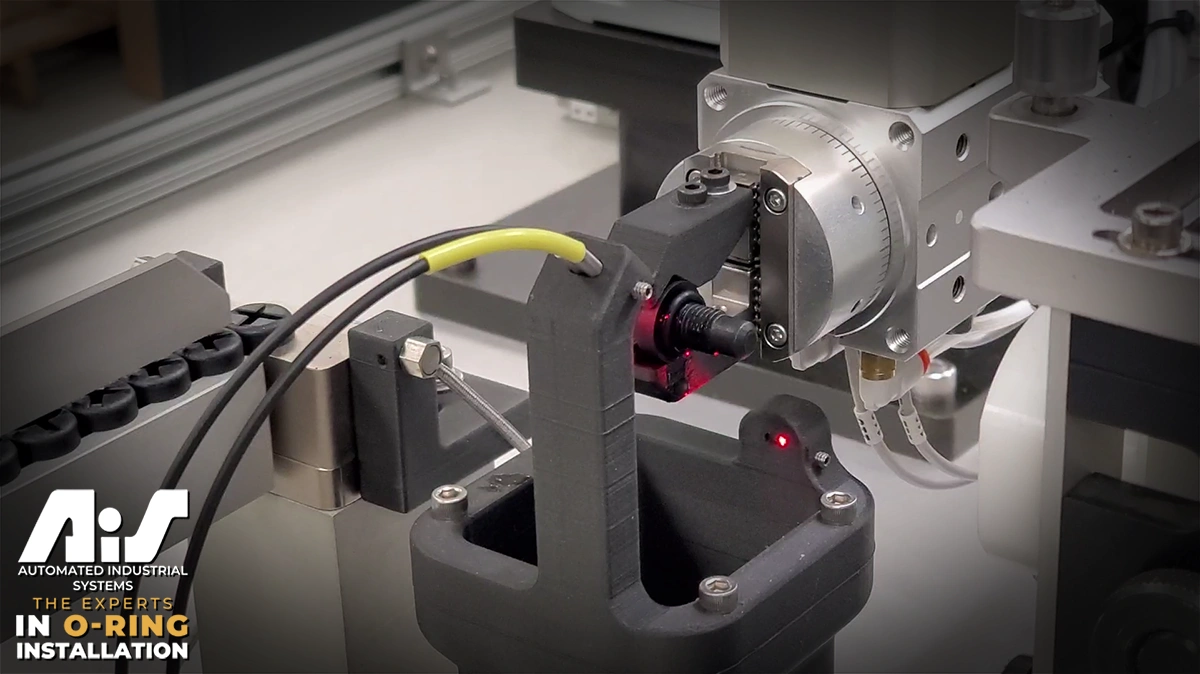
Presence and Position Sensors
For many applications, confirming that a seal is present and properly positioned is all that’s required. Fiber optic sensors do this quickly, reliably, and without contact.
They’re fast, repeatable, and well-suited for high-volume production.
Vision Systems
When parts get more complex, or when you need more than a yes/no answer, camera-based vision systems step in.
Vision inspection can:
-
Check multiple seal features in a single pass
-
Verify placement, depth, and orientation
-
Identify damaged seals, including nicks, cuts, twists, or deformation
-
Detect partial installs that “look fine” to the human eye
-
Feed inspection results directly into sorting or reject logic
This is where inspection moves beyond presence and into actual quality verification.
Actionable Results
Inspection only matters if something happens afterward.
-
Parts that pass continue downstream
-
Parts that fail are diverted to reject bins or flagged for rework
-
Inspection results can be logged for traceability, audits, and quality reporting
No inspection system should just light up a tower light and hope someone notices.
Simple to Complex. Matched to Your Process.
Inspection stations can be integrated with:
-
Manual O-ring installation machines
-
Semi-automatic systems
-
Fully automated cells using robots or indexed conveyors
You choose the level of automation that fits your volume, budget, and quality goals. We engineer around that reality.
Why Inspection Stations Matter
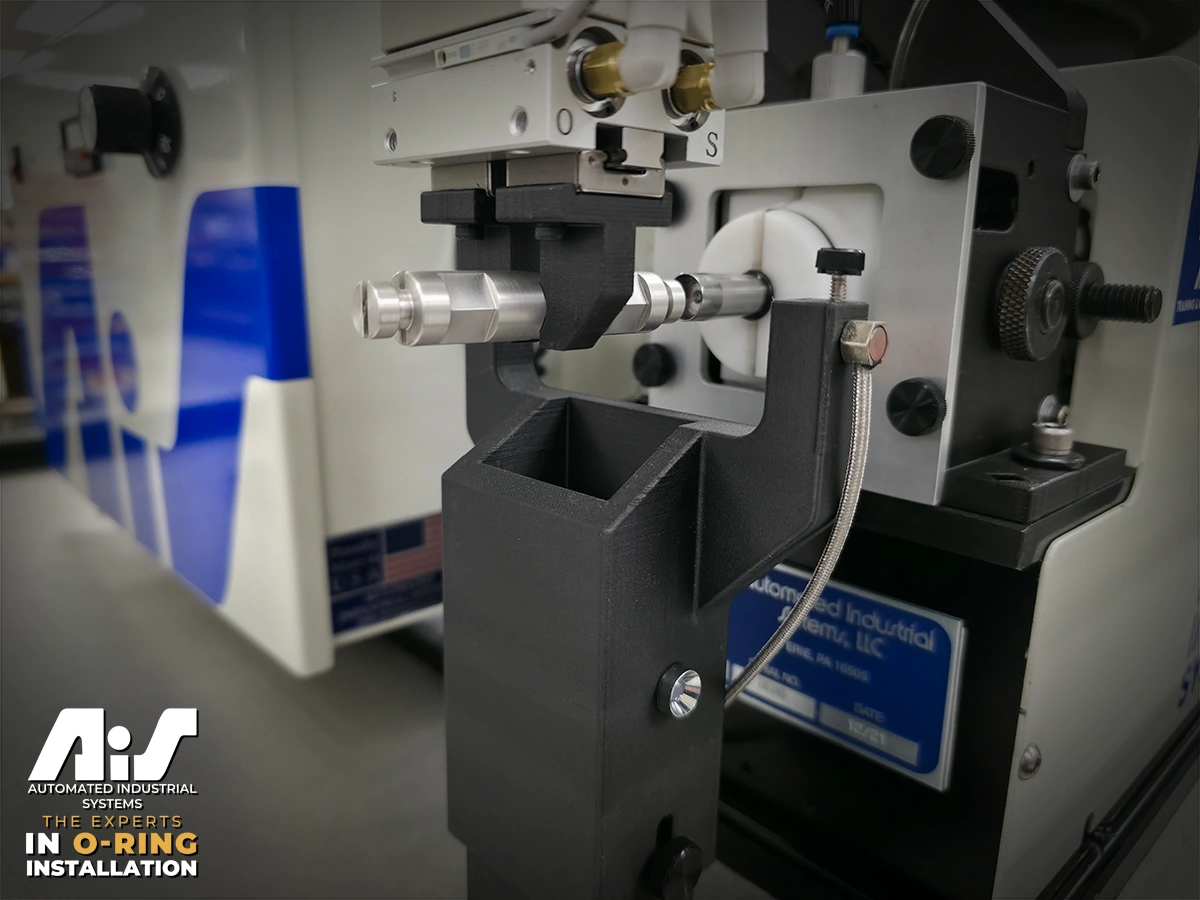
Installers like the ASP-1 External O-Ring Installation Machine and other AIS equipment make installation fast and repeatable. But even the best install step can’t guarantee the part meets spec until it’s checked.
Inspection stations close that gap.
-
Catch missing, mis-installed, or damaged seals before final assembly
-
Reduce rework and scrap
-
Protect downstream processes and finished products
-
Generate inspection data for quality systems and customer requirements
Inspection stations are quality insurance that tends to pay for itself, quietly and repeatedly.
Matching Inspection to Installation
Inspection stations are often paired with existing AIS installation equipment, including external, internal, and fully automatic systems.
We design inspection solutions that integrate cleanly into:
-
Benchtop setups
-
Inline automation cells
-
Multi-position shuttles
-
Robot workcells
Inspection is not bolted on at the end. It’s engineered to match your install method, cycle time, and throughput.
Learn More
If you want to see inspection working in a real application, take a look at how AIS designed a combined installation, inspection, and sorting solution in our Installing and Inspecting O-Rings article.
Because finding a bad seal after assembly is an expensive way to confirm you needed inspection in the first place.