When O-Rings Don’t Want to Behave
January 28, 2026
2 Different O-Rings on 1 Part
February 23, 2026Radial Stretch vs. Finger Grippers
Why Radial Stretch is the Only Sensible Installation Method for High-Performance O-Ring Seals
Seal Installation is a Process
In the world of sealing, installation is a process, and a surprisingly fragile one. You can spec the perfect elastomer, nail gland design, and squeezing strategy, but if the ring is damaged during installation, it won’t matter. Surface cuts, micro-tears, twists, residual stress, these don’t magically self-heal once you put your part in service.(O-Ring.info)
At AIS, we’ve dug into what actually causes seal failures in production (and what doesn’t). Here’s the practical side of why radial stretch installation beats finger grippers for consistency, integrity, and long-run reliability.
The Mechanics of a Proper O-Ring Install
O-rings are deceptively simple, a toroidal elastomer intended to provide a fluid-tight interface under compression. But that compression only works if the ring’s geometry and material integrity survive the installation event.(Parker Hannifin Corporation)
Industry assembly guides (like the ERIKS O-Ring Assembling Conditions handbook) stress the basics:
-
Never force a ring over sharp threads or edges.
-
Avoid twisting the ring during install.
-
Keep installed stretch within limits (ID stretch no more than 5–6%).
-
Use proper aids and tooling to avoid damage.(O-Ring.info)
These aren’t suggestions, they’re empirically grounded rules based on what actually damages elastomers during install.
What Radial Stretch Actually Does
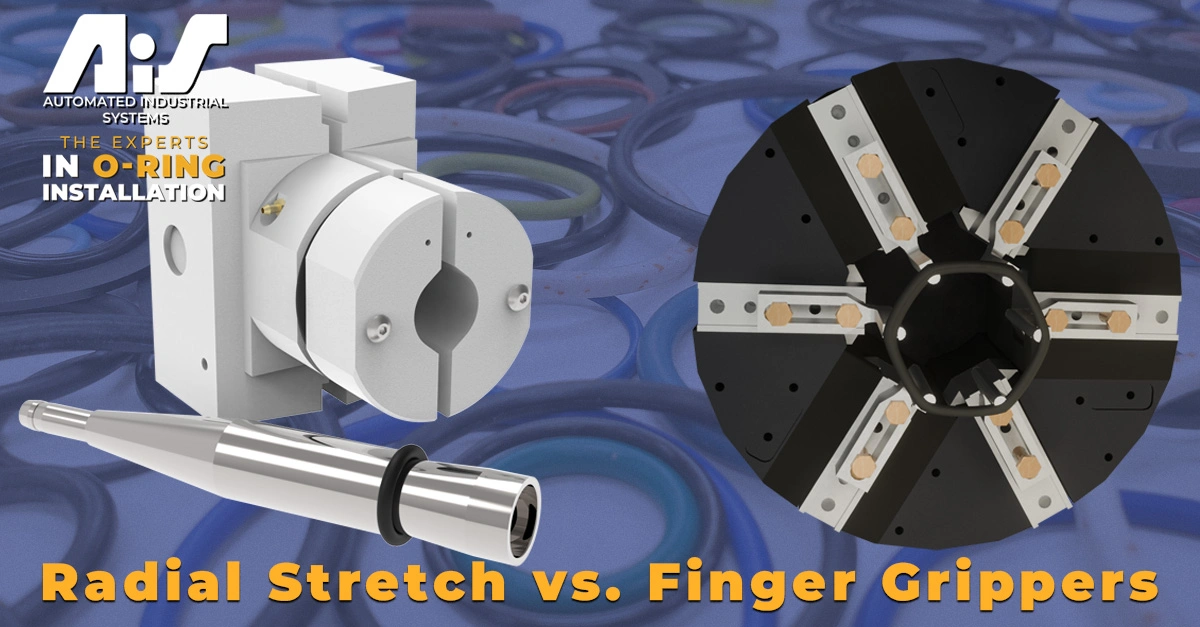
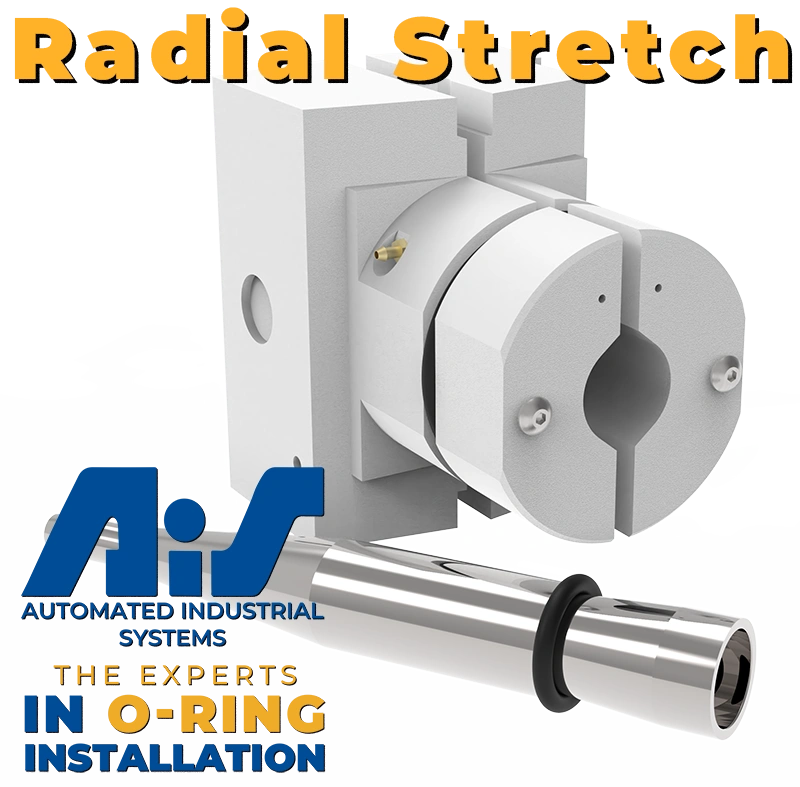
Radial stretch installation expands the O-ring uniformly around its inner diameter before seating it in the groove. This method:
-
Maintains the ring’s cylindrical profile
-
Eliminates localized tension points
-
Reduces micro tears or distortions
-
Keeps installed stress predictable and controlled
In radial stretch, the entire ring sees uniform expansion instead of uneven pull points. That matters because uneven stretch increases the chance of micro-damage, which in turn increases the likelihood of leak paths once the part is pressurized.
🧠 Translation for engineers: radial stretch helps keep the seal in its engineered stress state, rather than leaving random stress hot-spots that can trigger early failure.
Why Finger Grippers Fall Short
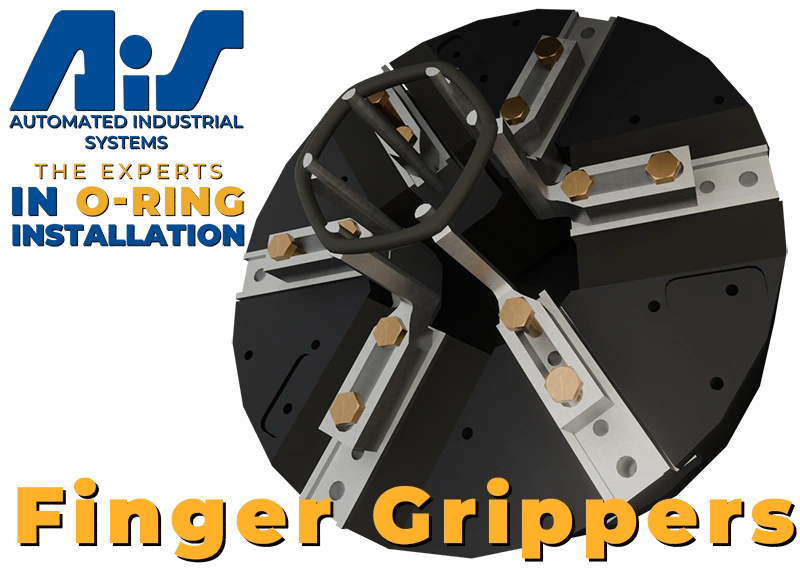
Finger grippers grab and pull the ring at discrete points. That point-load contact means:
-
Uneven local stretch
-
Higher risk of twist/spiral distortion
-
Friction and grip variation from cycle to cycle
It’s a bit like trying to roll out dough with three random chopsticks vs. a proper rolling pin. Science is on the side of uniform motion, especially when the tool must handle hundreds of thousands of parts without afternoon mood swings.
Installation damage is one of the most common failure modes for O-rings, and it often shows up as cuts, nicks, surface abrasion, or spiral twist marks that only become evident once the part is in service.(Global O-Ring and Seal)
Seal Integrity: What the Handbook Calls Out
Parker’s O-Ring Handbook, a decades-old staple in seal engineering, catalogs failure modes including spiral failure caused by twisting or uneven installation forces.(Parker Hannifin Corporation)
ERIKS’ technical guidance emphasizes:
-
ID stretch should not exceed ~5–6% once in the groove, more and you flatten the cross-section and reduce squeeze.
-
Excessive expansion beyond about 50% to get to the groove introduces residual stress; if you must exceed it, allow time for recovery.
-
Rings must not twist during installation, twisted seals are high-risk for leaks.
-
Sharp edges, threads, and burrs are trouble, these cause cuts, nicks, and even catastrophic failure.(O-Ring.info)
Radial stretch methods help you stay inside these limits, with tooling that inherently controls expansion and transfer motion.
Repeatability: The Unsexy, Unignorable KPI
Getting 10 good parts is not engineering, it’s luck. The real test is repeatability across shifts, materials, humidity swings, tooling wear, and ambient variations.
Radial stretch delivers:
-
Fixed geometries that don’t drift with finger wear
-
Predictable installation motion every cycle
-
Less reliance on real-time force/vision compensation
Finger grippers, on the other hand, rely on multiple variables, grip force, alignment, timing, surface friction, and compliant fingertips, all of which drift over time without significant compensation systems.
If you’ve ever debugged that kind of process 2 hours before shift start, you know why customers eventually ask for a system that just works.
Long-Run Reliability: The Proof Is in the Tonnage
Long-run reliability isn’t a “nice to have.” It’s what keeps warranty claims down and maintenance crews happy.
Common failure contributors that trace back to installation include:
-
Micro-abrasion due to friction (worse with uneven contact)
-
Cuts or nicks from sharp surfaces left unguarded
-
Twisted seals that never seated correctly
-
Flattened cross-sections from over-stretch
-
Spiral distortion from insertion errors(gmors.com)
Installation damage is not some fringe issue, it’s one of the primary root causes of O-ring leaks. When the installation method itself minimizes those risks, the entire seal life curve shifts in your favor.
Bottom Line
Radial stretch installation isn’t trendy, it’s engineered. It aligns with fundamental seal performance principles documented in the Parker O-Ring Handbook and ERIKS installation guidelines.(Parker Hannifin Corporation)
Every source you’d cite in a design review, from stretch limits to twisting risk, points back to controlled motion, uniform stress distribution, and repeatable placement. That’s what AIS machines deliver.
If your install method introduces variable contact stress, twist risk, or micro-damage, you’re not optimizing your seal, you’re gambling.
Want Consistent, Reliable O-Ring Install Performance?
AIS designs radial stretch–based O-ring installation systems that eliminate installation damage risk and deliver repeatable, high-yield performance. Whether you need standalone benchtop automation or full robotic integration, we engineer the process to help your seals actually seal.
Talk to AIS about a process-centric installation solution, not a guess.