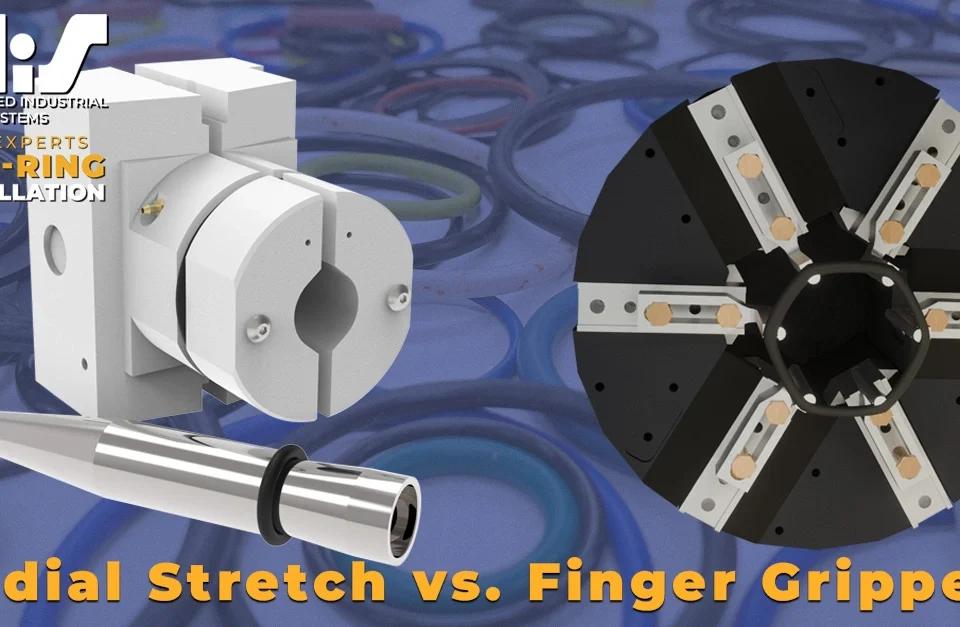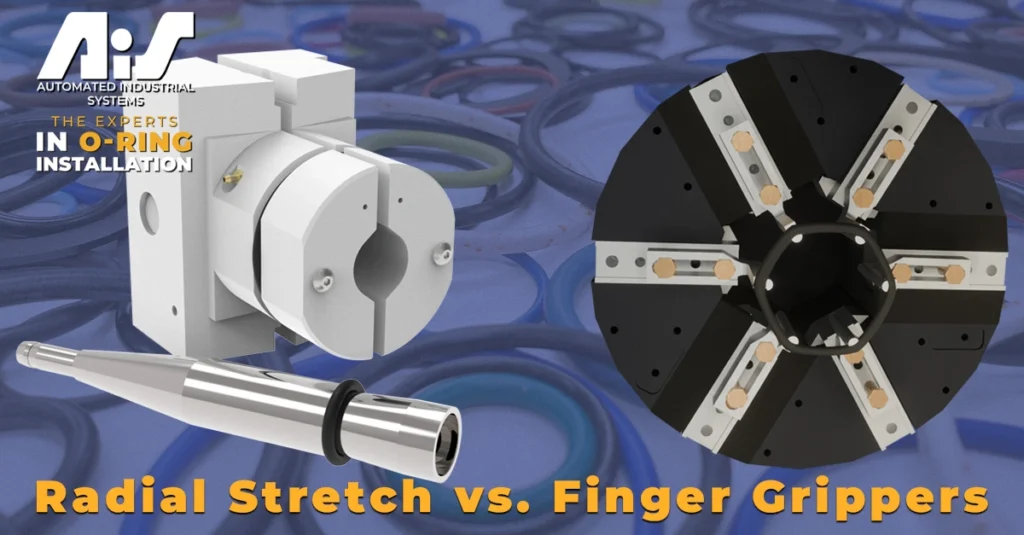
Radial Stretch vs. Finger Grippers
February 3, 2026
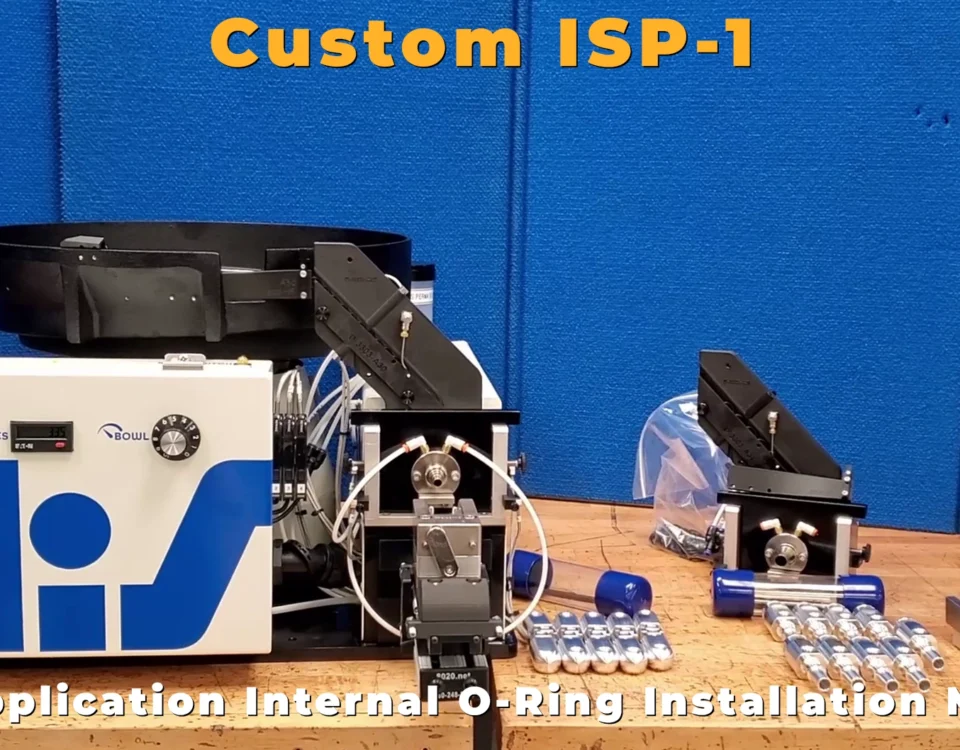
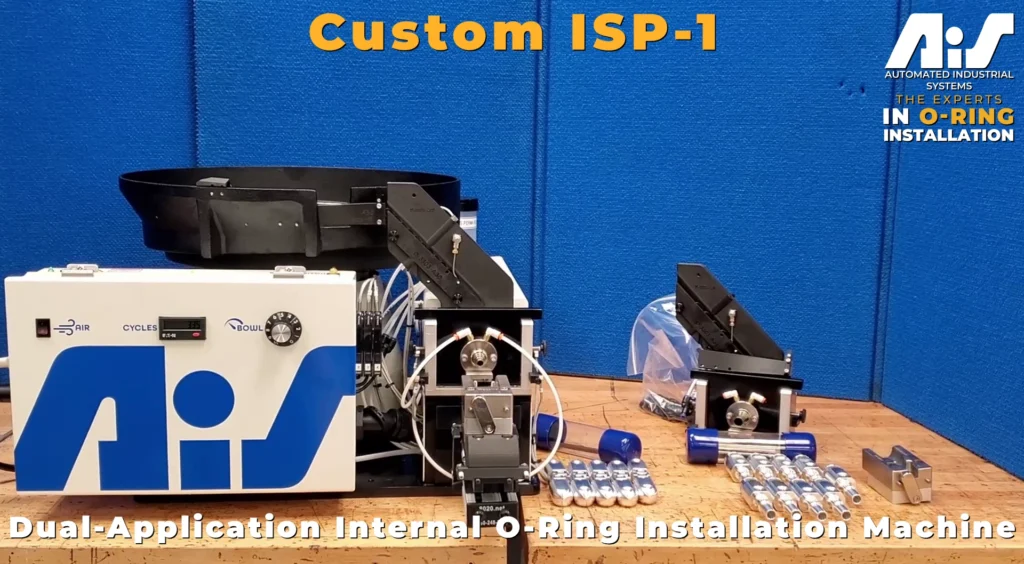
Dual-Application Internal O-Ring Installation Machine
March 9, 20262 Ends, 2 O-Rings, 1 Clean Process
A Dual ASP-1 Cell in Action
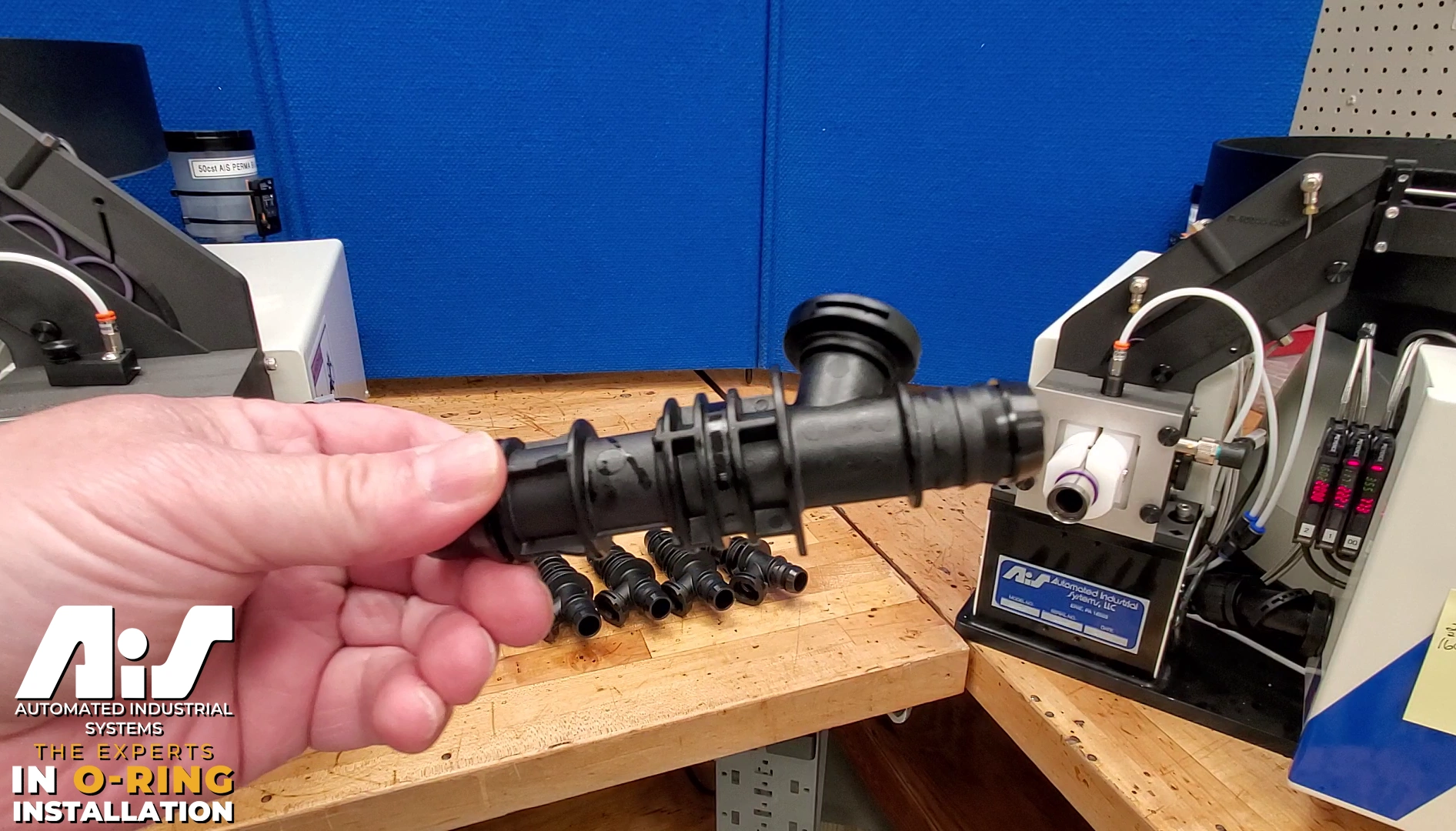
Some parts are easy. One groove, one O-ring, in and out.
This part was not as easy.
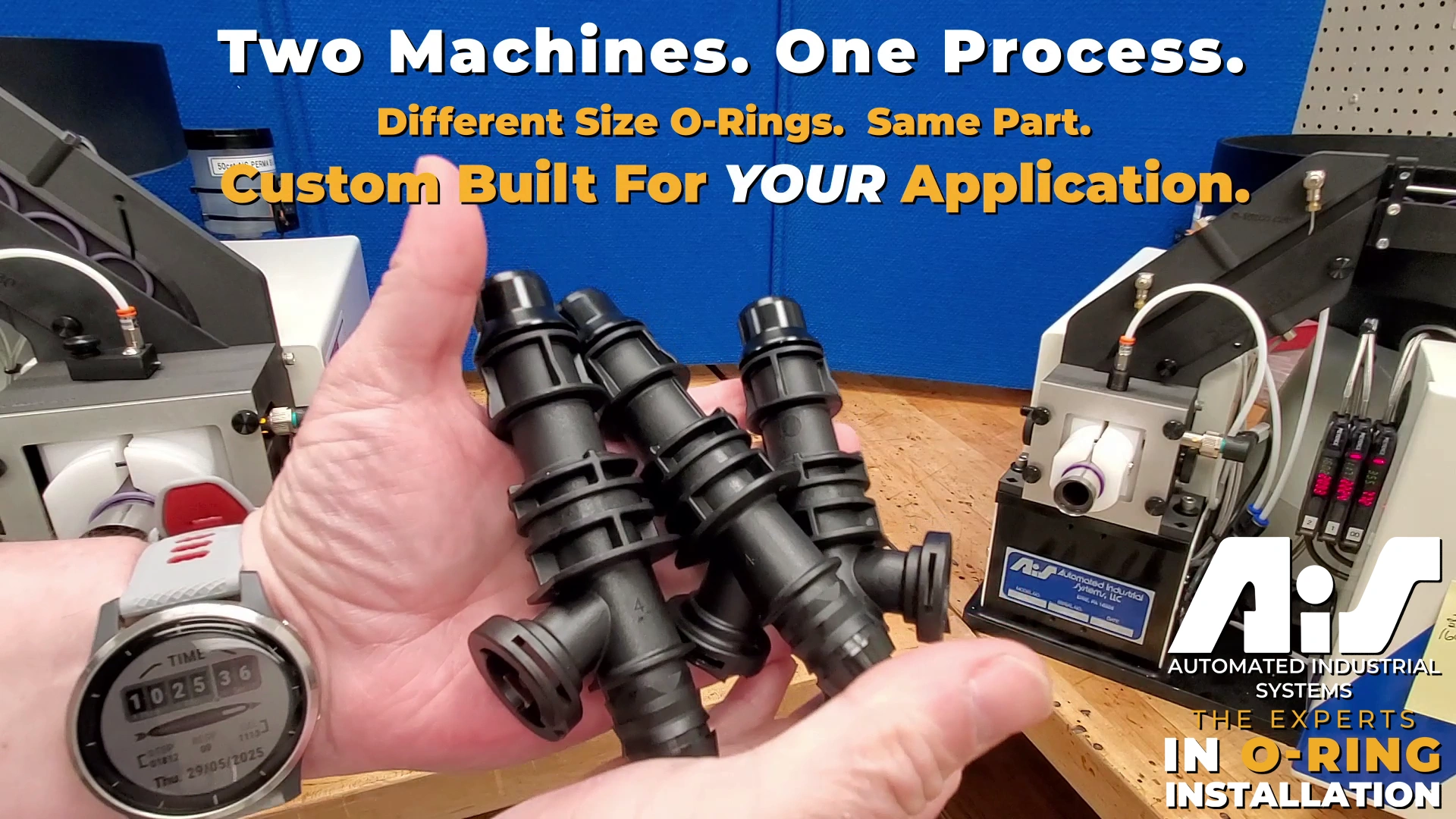
It needs two different O-rings installed on opposite ends of the same plastic component. One smaller seal on the small end, a larger seal installed deep on the big end. The customer needed:
-
Consistent placement on both ends
-
Less operator gymnastics and guesswork
-
A compact cell
-
Faster through-put than they had
So they sent the problem to AIS.
The result is what you see in this video, a matched pair of ASP-1 O-ring installation machines, left-hand and right-hand, set up to handle different ends of the same part, one part at a time.
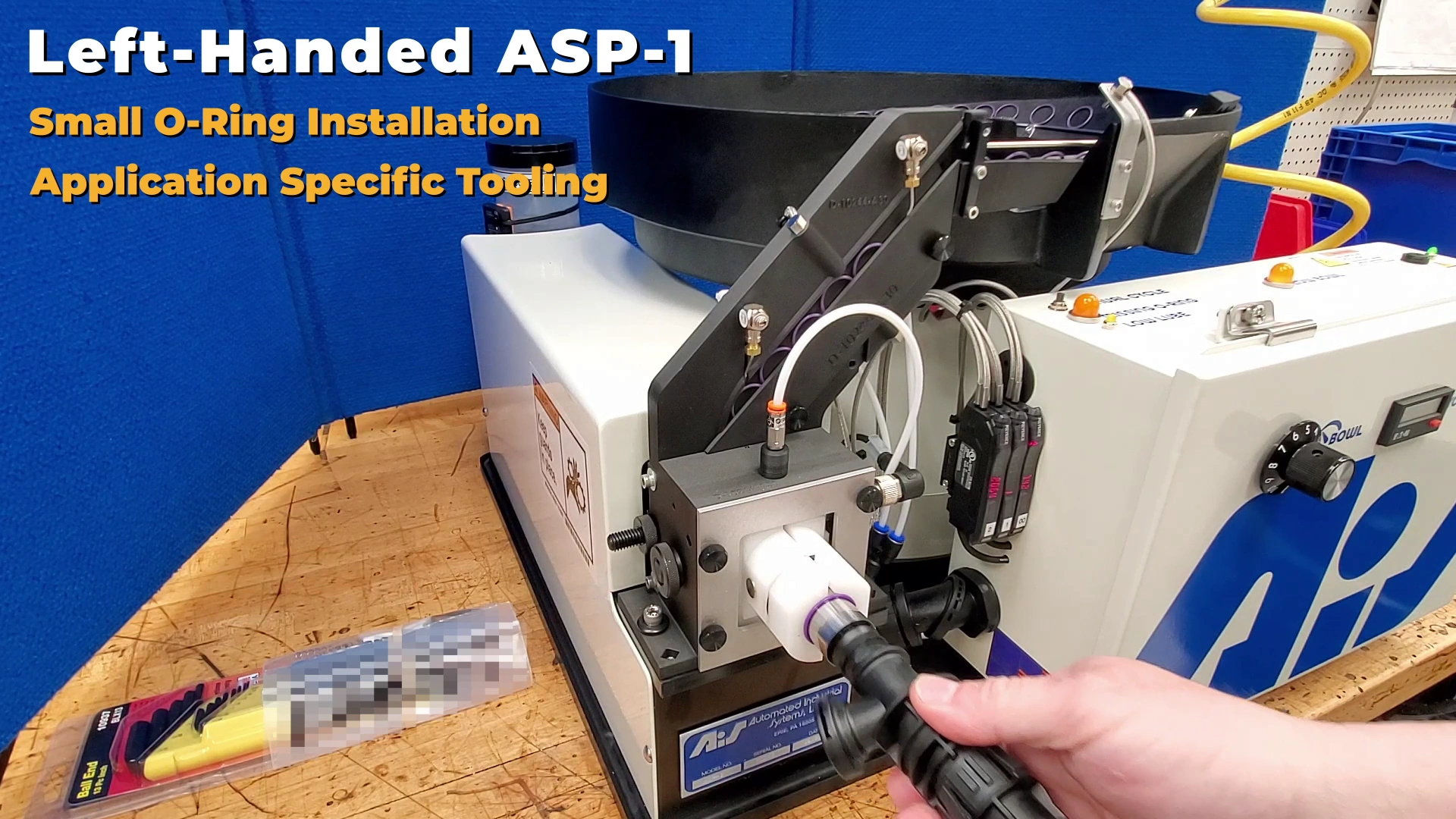
Small O-ring, left-hand ASP-1
The video opens with a quick fade to a left-hand ASP-1 running.
Four parts are presented to the machine one by one and the machine installs the smaller of the two seals needed:
-
The operator positions a single part
-
The ASP-1 installs the O-ring using AIS’s radial stretch method and slides it onto the groove
This is exactly what the ASP-1 is built for: fast, repeatable external seal installation in a compact benchtop footprint. It can handle a wide range of small O-rings and similar seals, with cycle rates up to 50–60 parts per minute depending on the application.
The important thing isn’t just speed. It’s that every part gets the same motion, the same stretch, and the same placement.
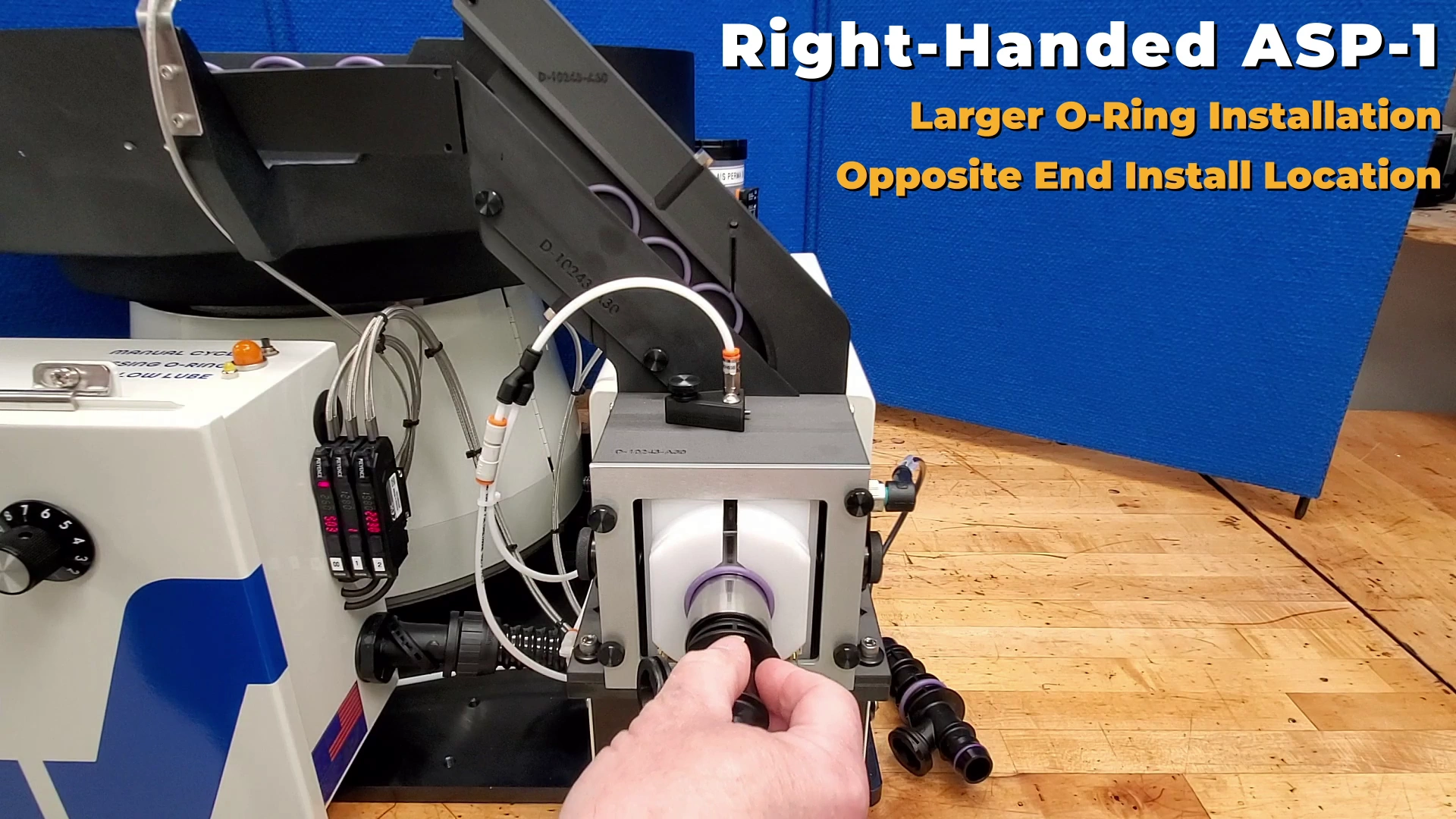
Large O-ring, right-hand ASP-1
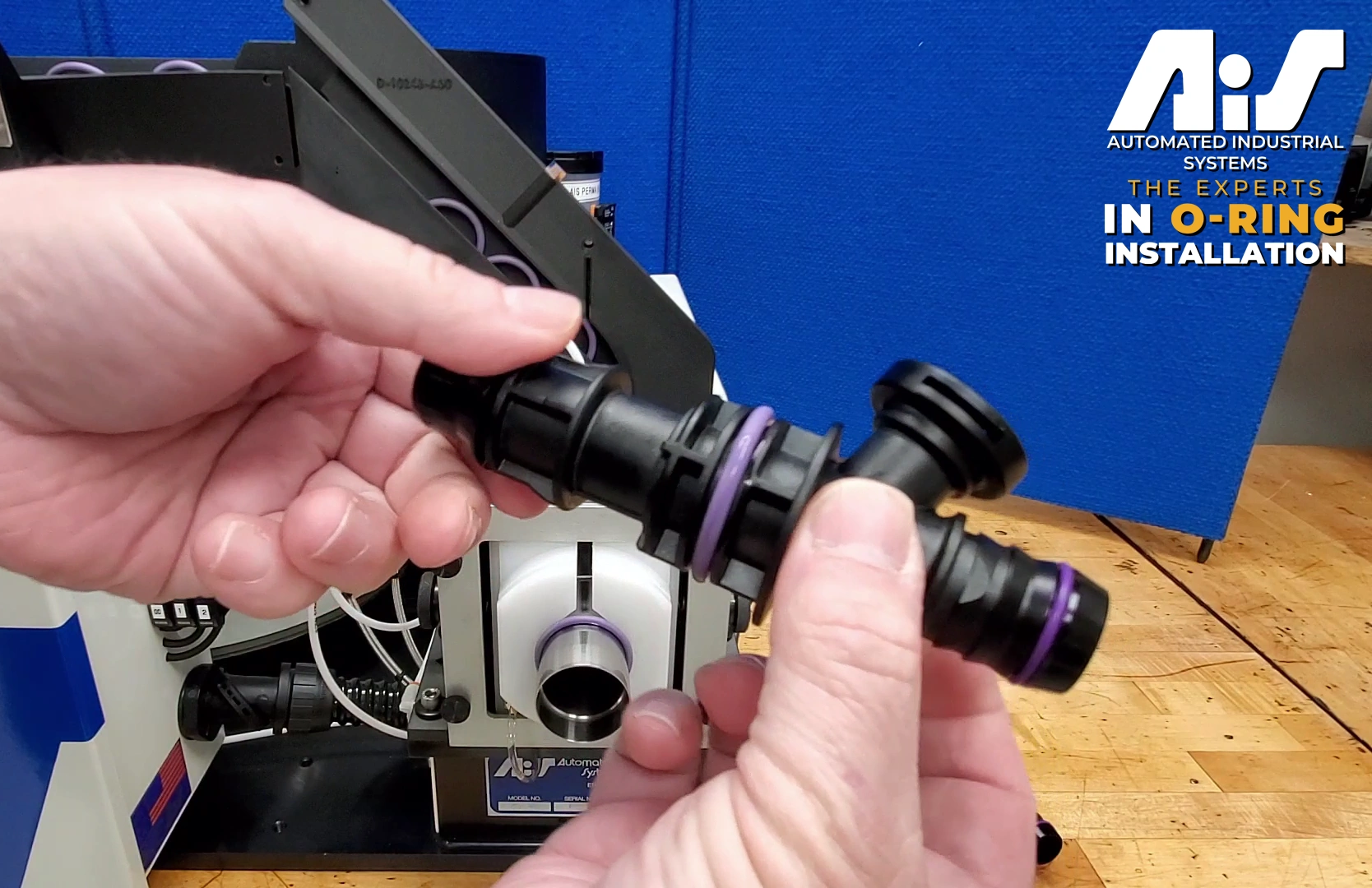
Next, the video fades to a right-hand ASP-1. Same four parts, but now each one already has the smaller purple O-ring on one end.
Here, the second ASP-1 is tooled for a larger O-ring installed deeper on the opposite end of the exact same part.
This is where the flexibility of the ASP-1 platform pays off. The machine can be set up in right- or left-hand configurations, with application-specific tooling that matches your part geometry and seal sizes.
Both machines, one simple sequence
In the final section, both ASP-1s are on screen together working the way they were built to. One seal after another.
What this setup actually solves
This cell didn’t start as a marketing video concept. It started as a real production problem that we see often. One part needs multiple different o-rings at different depths or in different sizes.
A couple of important things about the solution:
-
Same machine platform, mirrored layout
Both stations are ASP-1s, just configured left-hand and right-hand to match the way the operator works and how the parts need to move. -
One part at a time, controlled process
Installation is done one at a time at each machine. That keeps the motion predictable and the quality checks simple. -
Custom tooling, standard hardware
The core ASP-1 platform stays the same. The mandrels, stripper jaws, and tooling are designed for this customer’s part and seal geometry. -
Minimal footprint, maximum sanity
Two compact benchtop machines, instead of multiple scattered fixtures or a full custom transfer line.
It’s a good example of how AIS tends to work: use a proven machine platform, then engineer the tooling and layout around your part, not the other way around.
When a dual ASP-1 cell makes sense
A paired left-hand / right-hand ASP-1 setup like this is worth considering when:
-
One part needs multiple different sized O-rings
-
You want one operator and a contained workstation, not a walk-around scavenger hunt
-
Quality issues are coming from inconsistent manual installs, not the seals themselves
-
You’re not ready (or interested) in a massive fully automated line, but “more of the same hand work” isn’t cutting it
The ASP-1 can run as a hand-loaded semi-automatic machine, or be dropped into a more automated cell later if volumes, staffing, or ergonomics change.
Have a “two ends, two seals” problem of your own?
If your current process for installing multiple O-rings on a single part involves:
-
Sharpie marks
-
Tribal knowledge
-
And a growing rework pile
you’re exactly the kind of customer this cell was built for.
AIS can configure one or more ASP-1 machines, left-hand, right-hand, or both, around your specific parts, seal sizes, and workflow.
Send us a print, a sample part, or a short description of your current O-ring install problem and see what AIS can do for you!
Want Consistent, Reliable O-Ring Install Performance?
AIS designs radial stretch–based O-ring installation systems that eliminate installation damage risk and deliver repeatable, high-yield performance. Whether you need standalone benchtop automation or full robotic integration, we engineer the process to help your seals actually seal.
Talk to AIS about a process-centric installation solution, not a guess.